A Review of the Biomechanical Differences Between the High-bar and Low-bar Back-squat
A highly debated topic in many powerlifting forums is the loftier bar squat versus low bar back squat and which is all-time for powerlifting.
At that place is a range of opinions on which technique is best. Furthermore, there appear to exist a few misunderstandings surrounding these two squatting methods.
This article volition outline a number of crucial biomechanical principles to highlight the differences between the high and low bar squat.
In addition, information technology will also highlight the benefits of both techniques in a powerlifting context and help you determine which method to use.
- The Biomechanics of The High Bar and Low Bar Squat
- Bar Position
- Midfoot Balance
- Understanding Moment Arms
- Moment Arms During The Squat
- Back Angle
- Which Technique Is Best?
- Technique Considerations
- When To Use Loftier Bar
- Q1) Are high bar squats harder than low bar squats?
- Q2) What is the difference betwixt the high bar squat and low bar squat?
- Q3) Is the low bar squat bad for the shoulders and hips?
- Q4) Which method should I utilize?
- Final Word
- References:
The Biomechanics of The Loftier Bar and Low Bar Squat
Any good lifter understands the importance of developing good technique and the affect it tin can have on performance.
However, even with years of preparation and experience, it is possible that there are some inefficiencies in technique. Even some height-level athletes use inefficient techniques.
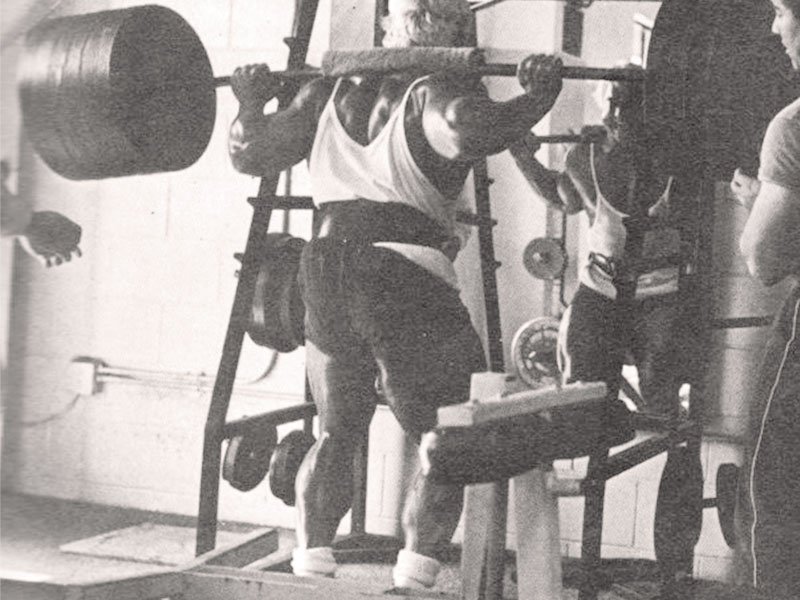
In order to improve our technique, it is worthwhile to beginning clarify and understand the demands of the movements through biomechanics.
In unproblematic terms, biomechanics is the study of a living body and how information technology moves in mechanical terms.
When assessing technique, there are a number of biomechanical factors to be considered including leverage, articulation angles, mechanical advantages, load distribution, and musculus activation.
Bar Position
We'll brainstorm by outlining the differences in position between the high and low bar squat.
As the names suggest, in the high bar squat, the bar sits higher up the back on the upper trapezius muscle.
Meanwhile, the low bar squat places the bar approximately three to iv inches lower so that the bar sits right above the spine of the scapula.
While you may encounter this every bit an insignificant departure, the small change in bar position actually has a large bear upon on squatting mechanics.
Midfoot Balance
Earlier considering these changes to movement mechanics, let'southward have a moment to encompass the importance of balance.
A usually used coaching cue for the squat is to drive through your heels. Nonetheless, it's of import that nosotros consider balance from a biomechanical standpoint.
A organization is balanced when information technology establishes a point where the least effort is required to remain stable or where the most strength is needed to disrupt the system.
Therefore, during whatsoever squatting move, it is best to focus on maintaining a mid-foot balance.
Using the mid-foot is well-nigh optimal as it volition spread the load throughout the foot with equal amounts to the rear and forefoot.
Placing the load through the heels or toes increases instability and would not crave a great deal of force to knock y'all off balance.
Establishing mid-human foot balance is vastly important because any time the system between the lifter and barbell becomes unbalanced, the elevator becomes significantly more difficult.
This occurs due to the creation of a moment arm between the rest point (feet) and the point of force awarding (barbell).
Understanding Moment Arms
"Moment" refers to the force that causes rotation around an axis.
The best example of this is to recollect nearly using a wrench to plough a bolt as the forcefulness that moves down the handle is a moment strength.
The moment arm refers to the length of that handle that is used. By using a longer handle, yous are able to create more force and turn the bolt with greater ease.
Using this analogy, let's apply it to the lifter and barbell.
The barbell would be the hand on the wrench (point of force awarding) while the distance between the bar and joints of the body would be the wrench handle (moment arm).
The greater the distance between the bar and the joints, the longer the moment arm. This profoundly increases the amount of leverage needed to successfully consummate the elevator.
By creating short moment arms, the amount of leverage required to overcome the load is minimized.
In simpler terms, the shorter the altitude between the bar and the joints of the body, the easier the elevator will be.
Moment Artillery During The Squat
In the low bar squat, a substantial forrard trunk lean is seen in order to keep the torso over the midfoot.
As a issue, the moment arm created between the bar and the hips is profoundly increased while the moment arm between the bar and the knees becomes shortened.
Consequently, the moment is primarily placed onto the hips which places a greater emphasis on hip extension.
With the loftier bar squat, less of a body lean is required which slightly reduces the bar-hip moment arm and slightly increases the bar-human knee moment arm.
This places slightly less need on the hips, more on the knees, and, consequently requires greater knee extensor strength.
In light of this, it can exist concluded that the low bar squat is a more than hip-ascendant technique than the loftier bar squat (ane).
Back Angle
In order to preclude the bar from rolling forrard onto the neck, the high bar position requires a more upright trunk position. This results in a more unstable position
However, with the depression bar squat, a greater body lean occurs (two) which keeps the bar anchored to the back. Therefore, past performing the low bar squat, you are in no way limited past the trunk bending every bit you lot are with the loftier bar squat.
Which Technique Is Best?
There are a number of considerations to be made when selecting either loftier or depression bar squats.
The high bar position lengthens the torso which prevents you lot from leaning forrad which would usually allow you lot to keep the bar over the middle of the pes.
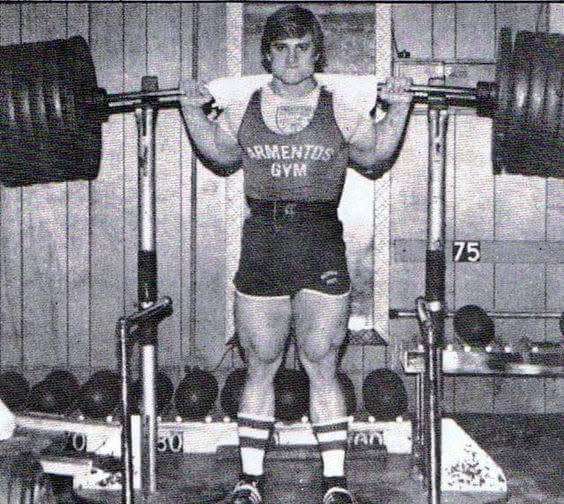
This method requires a more than upright back angle which tends to cause the knees to move forward. Allowing the knee to travel forwards in this mode has implications.
While it does allow for a greater range of motion, it also shifts the demand from the hips to the knees. This is less than ideal for heavy lifting.
And increasing the range of move requires a greater corporeality of force to drive up and out of the squat.
Also, the muscles of the anterior concatenation cannot generate the same corporeality of power as the muscles of the posterior chain.
Therefore, the high bar position may make it more challenging to squat maximal weights.
Unlike the loftier bar squat, the depression bar method allows for a substantial trunk lean while ensuring that the bar stays stable and anchored to the back.
Leaning forward while squatting minimizes the amount of knee joint travel. This reduces the range of motion and shifts the leverage to the posterior chain rather than the inductive concatenation.
Reducing the range of motion reduces the amount of work required while also utilizing the strongest muscles of the legs. Therefore, the low bar may be preferable for heavy lifting (3).
Technique Considerations
While it appears that low bar squat may exist almost optimal for heavy lifting, the most effective powerlifting squat volition fit the following criteria.
i) Trunk lean angle of approximately 55 to 65% at the lesser of the squat.
2) An efficient residual between hip and genu moments
3) Knees pushed out to cause greater recruitment of the hip extensors and external rotators
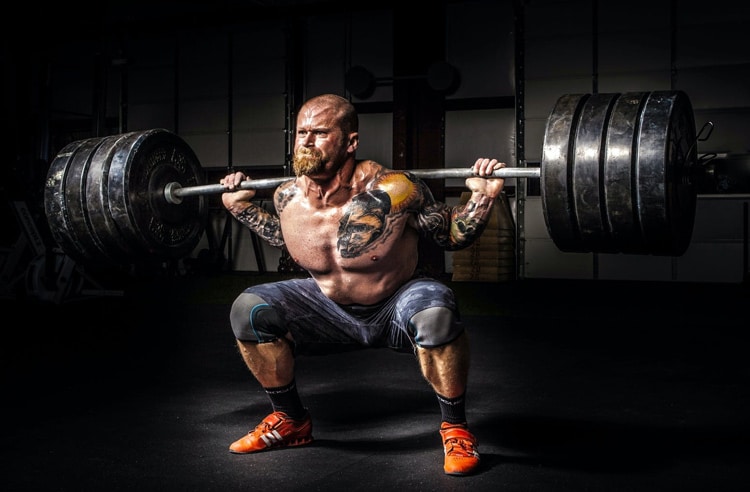
It is of import to recognize that the squatting technique tends to vary from person to person due to a number of factors.
Limb lengths, body proportions, anatomy, hip & shoulder flexibility, and individual strengths and weaknesses will all take an influence on how well you lot perform during the squat.
Every bit a event, you may detect that yous fulfill this criteria when using the high bar squat rather than the depression bar.
Be willing to spend time on your technique and consider working with a passenger vehicle to aid you lot empathise which technique is best for you lot.
When To Utilize High Bar
For those who take issues with their hips, it may be necessary to use the high bar squat. This is particularly true for those with brusque torsos.
This will assist to maintain a more upright trunk bending and reduce the amount of stress placed on the hips.
In a similar fashion, those who have shoulder problems may find that the low bar squat is unsuitable equally information technology places too much strain on the shoulder articulation.
FAQs
Q1) Are high bar squats harder than low bar squats?
A) From a biomechanical perspective, yeah. The depression bar squat recruits the powerful muscles of the posterior concatenation more than the high bar squat which allows heavier weight to be lifted.
Q2) What is the departure between the loftier bar squat and depression bar squat?
A) In the high bar squat, the bar position causes the body to stay upright and is more genu dominant while the low bar allows for greater trunk lean and is more hip-dominant.
Q3) Is the low bar squat bad for the shoulders and hips?
A) Providing that you lot do not have whatsoever hip or shoulder bug, the low dorsum squat is condom. Those who practice suffer from issues may find the loftier bar squat to be more suitable.
Q4) Which method should I apply?
A) There are a number of factors that volition determine suitability. Withal, generally speaking, the low bar squat will allow for heavier lifts and, therefore, is more suitable for powerlifters.
Final Give-and-take
Looking at the biomechanical analysis, it is clear that the low bar squat holds a mechanical advantage over the high bar squat.
It appears to be superior for powerlifting as it is more hip-dominant and stable than the low bar squat. Therefore, the low bar may permit y'all to elevator a greater amount of weight in comparison to the high bar squat.
References:
ane – P, Wretenberg; Y, Feng; Up, Arborelius (1996 Feb). "Loftier- And Low-Bar Squatting Techniques During Weight-Training". Medicine and scientific discipline in sports and do. PMID 8775157.
2 – Dj, Glassbrook; Er, Helms; Sr, Brown; Ag, Storey (2017 Sep). "A Review of the Biomechanical Differences Betwixt the High-Bar and Low-Bar Dorsum-Squat". Journal of strength and conditioning research. PMID 28570490.
3 – Dj, Glassbrook; Sr, Chocolate-brown; Er, Helms; South, Duncan; Ag, Storey (2019 Jul). "The Loftier-Bar and Depression-Bar Back-Squats: A Biomechanical Analysis". Journal of force and workout research. PMID 28195975.
Source: https://fitnessvolt.com/high-bar-vs-low-bar-squat/
0 Response to "A Review of the Biomechanical Differences Between the High-bar and Low-bar Back-squat"
Post a Comment