Big Ideas Algebra 1 Tests and Chapter Review
Demand an opportunity to become math proficient? And so, this article will assist you to turn like that. As this page holds benefitted B ig Ideas Math Algebra 1 Answers Affiliate 11 Information Assay and Displays Questions to solve and amend discipline knowledge. Students who want to exercise all topics from ch 11 Information Analysis and Displays can explore BIM algebra 1 ch 11 solution key pdf. Enhance your math skills with the assist of xi.1 to 11.five Exercises Questions, Practice Tests, Cumulative Cess, Review Tests, Quiz, etc. involve in the BigIdeas Math Volume Algebra i Affiliate 11 Data Assay and Displays Solution Key.
Large Ideas Math Algebra one Textbook Solutions for Chapter 11 Data Analysis and Displays
Brand a bang-up move at the fourth dimension of your practice sessions or exam preparation by using the ultimate guide of Big Ideas Math Book Algebra 1 Answers Affiliate 11 Data Analysis and Displays. This guide tin can assist each and every learner past providing a deep level & footstep by step caption nearly the concepts of Algebra 1 Ch 11. Yous can besides make use of this BIM Algebra 1 Chapter 11 Information Analysis and Displays as quick revision material during exams.
These solutions are prepared by the subject experts as per the Mutual Core Curriculum. Click on the direct links available here and start practicing the respective Large Ideas Math Algebra one Textbook Answers of Chapter 11 concepts for amend knowledge and operation in the annual exams.
- Data Analysis and Displays Maintaining Mathematical Proficiency – Folio 583
- Data Analysis and Displays Mathematical Practices – Folio 584
- Lesson eleven.1 Measures of Centre and Variation – Page(586-592)
- Measures of Centre and Variation 11.1 Exercises – Page(590-592)
- Lesson 11.two Box-and-Whisker Plots – Folio(594-598)
- Box-and-Whisker Plots eleven.2 Exercises – Page(597-598)
- Lesson 11.3 Shapes of Distributions – Page(600-606)
- Shapes of Distributions eleven.iii Exercises – Page(604-606)
- Data Assay and Displays Written report Skills: Studying for Finals – Page 607
- Data Analysis and Displays 11.i–11.three Quiz – Page 608
- Lesson 11.four Two-Fashion Tables – Page(610-616)
- Two-Manner Tables 11.four Exercises – Page(614-616)
- Lesson 11.5 Choosing a Data Display – Page(618-622)
- Choosing a Data Brandish 11.5 Exercises – Page(621-622)
- Data Analysis and Displays Performance Task: College Students Study Fourth dimension – Page – 623
- Data Assay and Displays Affiliate Review – Folio(624-626)
- Data Assay and Displays Chapter Test – Folio 627
- Data Analysis and Displays Cumulative Assessment – Page (628-630)
Data Analysis and Displays Maintaining Mathematical Proficiency
The tabular array shows the results of a survey. Brandish the data in a histogram.
Question ane.
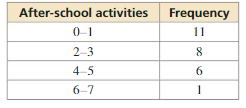
Answer:
Question 2.
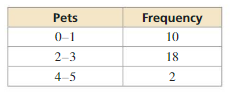
Answer:
The table shows the results of a survey. Display the data in a circle graph.
Question 3.

Answer:
Question 4.
Abstruse REASONING
Twenty people respond "yeah" or "no" to a survey question. Let a and b stand for the frequencies of the responses. What must exist truthful about the sum of a and b? What must be true nearly the sum when "maybe" is an pick for the response?
Answer:
Data Analysis and Displays Mathematical Practices
Mathematically proficient students use diagrams and graphs to show relationships betwixt data. They too analyze data to draw conclusions.
Using Information Displays
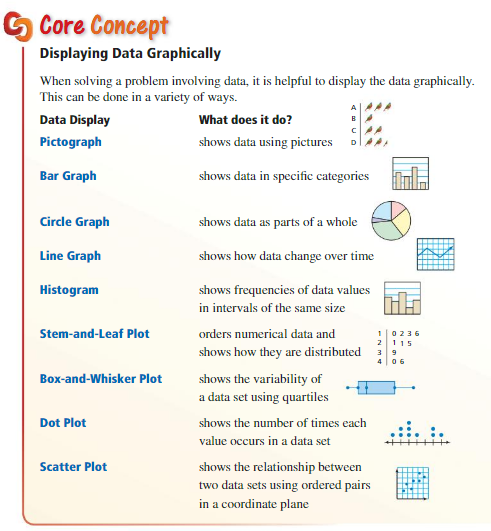
Monitoring Progress
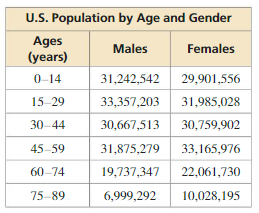
Question 1.
The table shows the estimated populations of males and females by age in the United States in 2012. Use a spreadsheet, graphing computer, or another form of technology to make two different displays for the data.
Respond:
Question 2.
Explicate why you chose each type of data brandish in Monitoring Progress Question 1. What conclusions tin you draw from your data displays?
Reply:
Lesson 11.1 Measures of Center and Variation
Essential Question
How can you describe the variation of a data set?
EXPLORATION ane
Describing the Variation of Data
Work with a partner. The graphs show the weights of the players on a professional football team and a professional baseball team.
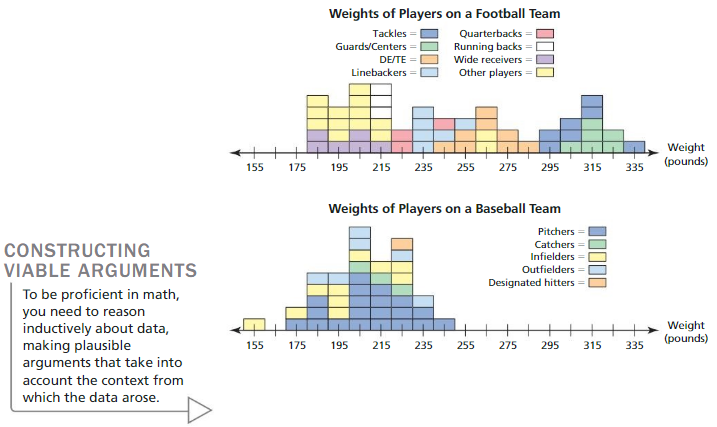
a. Describe the data in each graph in terms of how much the weights vary from the mean. Explain your reasoning.
b. Compare how much the weights of the players on the football team vary from the mean to how much the weights of the players on the baseball game team vary from the hateful.
c. Does in that location appear to be a correlation between the body weights and the positions of players in professional football? in professional baseball? Explain.
Answer:
EXPLORATION 2
Describing the Variation of Data
Work with a partner. The weights (in pounds) of the players on a professional basketball team by position are as follows.
Power forward: 235, 255, 295, 245; small-scale forrad: 235, 235;
centers: 255, 245, 325; indicate guards: 205, 185, 205; shooting guards: 205, 215, 185
Brand a graph that represents the weights and positions of the players. Does there announced to be a correlation betwixt the trunk weights and the positions of players in professional basketball game? Explicate your reasoning.
Respond:
Communicate Your Answer
Question 3.
How tin you describe the variation of a data set?
Reply:
Monitoring Progress
Question 1.
WHAT IF?
The park hires another student at an hourly wage of $eight.45. (a) How does this additional value touch on the hateful, median, and mode? Explain. (b) Which measure of center all-time represents the data? Explain.
Answer:
Question two.
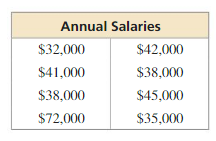
The table shows the almanac salaries of the employees of an auto repair service. (a) Identify the outlier. How does the outlier touch the mean, median, and style? (b) Draw one possible explanation for the outlier.
Answer:
Question iii.
After the first week, the 25-year-old is voted off Prove A and the 48-year-old is voted off Show B. How does this affect the range of the ages of the remaining contestants on each show in Instance 3? Explain.
Reply:
Question 4.
Detect the standard departure of the ages for Show B in Example iii. Translate your effect.
Answer:
Question 5.
Compare the standard deviations for Show A and Evidence B. What can you conclude?
Respond:
Question six.
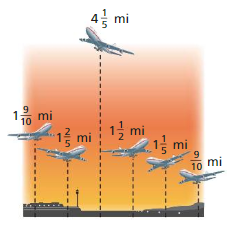
Notice the mean, median, fashion, range, and standard deviation of the altitudes of the airplanes when each altitude increases by \(\frac{one}{ii}\) miles.
Answer:
Measures of Heart and Variation 11.1 Exercises
Vocabulary and Core Concept Check
Question 1.
VOCABULARY
In a data gear up, what does a measure of center represent? What does a measure of variation describe?
Answer:

Question 2.
WRITING
Draw how removing an outlier from a data ready affects the hateful of the data set.
Answer:
Question three.
Open up-Ended
Create a data prepare that has more than ane way.
Answer:

Question 4.
REASONING
What is an advantage of using the range to depict a data set? Why do you retrieve the standard deviation is considered a more reliable measure of variation than the range?
Answer:
Monitoring Progress and Modeling with Mathematics
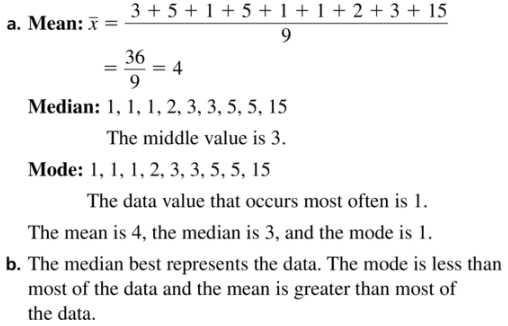
In Exercises 5–viii, (a) Detect the mean, median, and fashion of the data set and (b) decide which measure of middle best represents the information. Explain. (Meet Instance 1.)
Question v.
3, 5, 1, 5, i, ane, 2, three, xv
Answer:
Question 6.
12, 9, 17, 15, 10
Answer:
Question 7.
13, 30, 16, 19, 20, 22, 25, 31
Answer:
Question 8.
xiv, xv, 3, 15, 14, 14, xviii, 15, 8, sixteen
Reply:
Question 9.
ANALYZING Information
The table shows the lengths of ix movies.
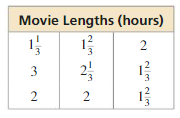
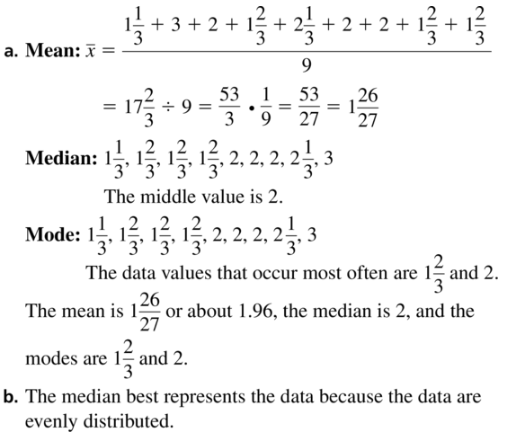
a. Discover the hateful, median, and mode of the lengths.
b. Which measure of center best represents the data? Explain.
Answer:
Question 10.
ANALYZING Data
The table shows the daily changes in the value of a stock over 12 days.
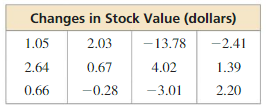
a. Observe the mean, median, and manner of the changes in stock value.
b. Which measure of heart all-time represents the data? Explain.
c. On the 13th twenty-four hour period, the value of the stock increases by $iv.28. How does this additional value affect the mean, median, and manner? Explain.
Answer:
In Exercises 11–xiv, detect the value of x.
Question xi.
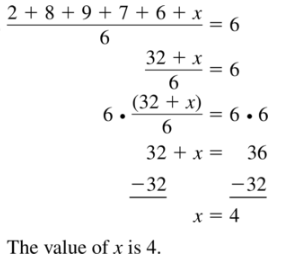
2, 8, 9, 7, 6, x; The mean is half-dozen.
Answer:
Question 12.
12.5, -x, -7.5, x; The mean is 11.5.
Answer:
Question 13.
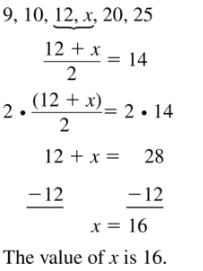
nine, 10, 12, x, 20, 25; The median is 14.
Answer:
Question 14.
thirty, 45, x, 100; The median is 51.
Answer:
Question 15.
ANALYZING Information
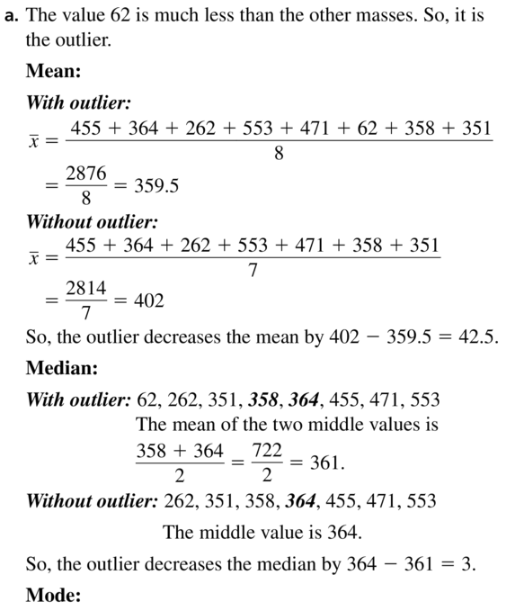
The table shows the masses of eight polar bears. (Encounter Case ii.)
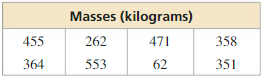
a. Identify the outlier. How does the outlier affect the mean, median, and fashion?
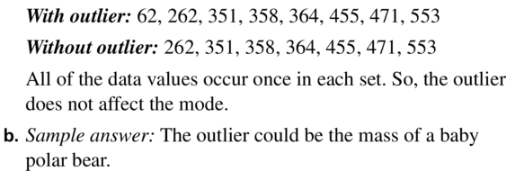
b. Describe one possible explanation for the outlier.
Answer:
Question xvi.
ANALYZING DATA
The sizes of emails (in kilobytes) in your inbox are 2, 3, 5, 2, one, 46, 3, 7, 2, and one.
a. Identify the outlier. How does the outlier affect the mean, median, and mode?
b. Describe one possible explanation for the outlier.
Answer:
Question 17.
ANALYZING Information
The scores of two golfers are shown. Discover the range of the scores for each golfer. Compare your results. (Come across Instance 3.)
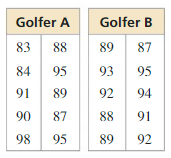
Reply:
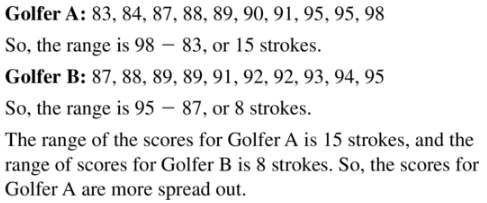
Question 18.
ANALYZING DATA
The graph shows a player'due south monthly domicile run totals in two seasons. Find the range of the number of dwelling runs for each season. Compare your results.
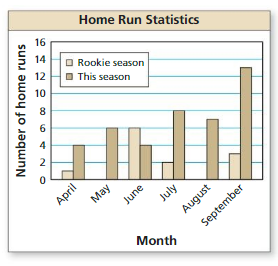
Answer:
In Exercises xix–22, detect (a) the range and (b) the standard deviation of the data prepare.
Question 19.
40, 35, 45, 55, lx
Answer:
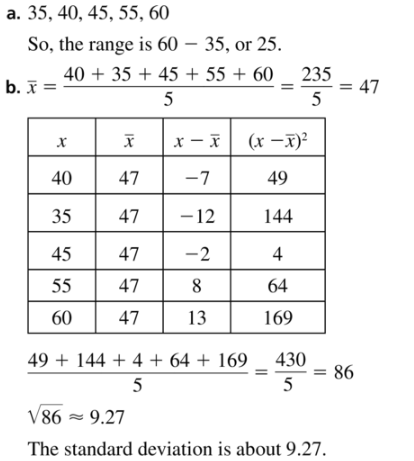
Question twenty.
141, 116, 117, 135, 126, 121
Answer:
Question 21.
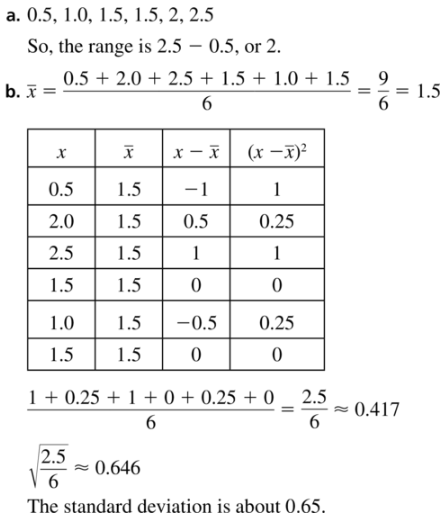
0.5, 2.0, 2.5, i.5, 1.0, 1.5
Answer:
Question 22.
8.ii, 10.1, ii.6, 4.8, ii.four, five.6, 7.0, iii.three
Answer:
Question 23.
ANALYZING DATA
Consider the data in Practise 17.
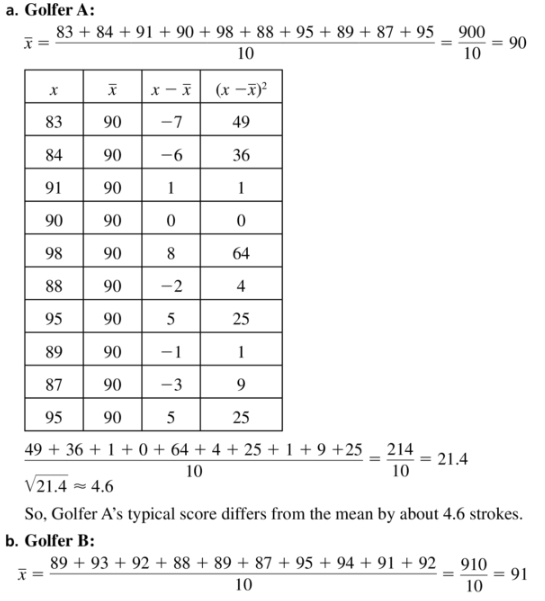
a. Detect the standard divergence of the scores of Golfer A. Interpret your result.
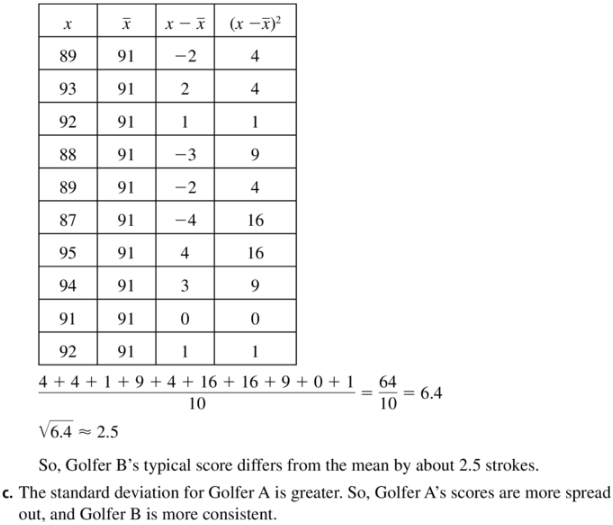
b. Observe the standard deviation of the scores of Golfer B. Interpret your result.
c. Compare the standard deviations for Golfer A and Golfer B. What can you conclude?
Answer:
Question 24.
ANALYZING DATA
Consider the data in Exercise eighteen.
a. Find the standard deviation of the monthly home run totals in the player's rookie season. Interpret your result.
b. Find the standard deviation of the monthly home run totals in this season. Interpret your result.
c. Compare the standard deviations for the rookie season and this season. What can y'all conclude?
Respond:
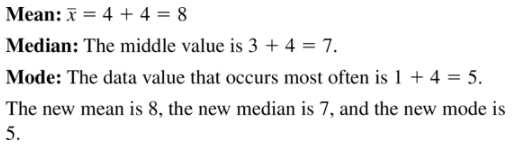
In Exercises 25 and 26, find the mean, median, and mode of the data set afterwards the given transformation.
Question 25.
In Exercise 5, each information value increases past iv.
Answer:
Question 26.
In Exercise half dozen, each information value increases past twenty%.
Reply:
Question 27.
TRANSFORMING Data
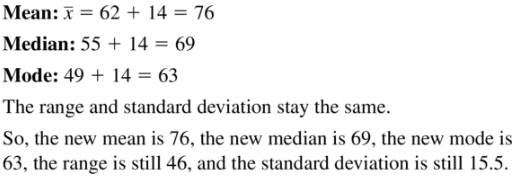
Notice the values of the measures shown when each value in the information set increases by 14.
Hateful: 62
Median: 55
Style: 49
Range: 46
Standard deviation: fifteen.5
Reply:
Question 28.
TRANSFORMING DATA
Discover the values of the measures shown when each value in the information set is multiplied by 0.five.
Hateful: 320
Median: 300
Way: none
Range: 210
Standard deviation: 70.vi
Answer:
Question 29.
Mistake Analysis
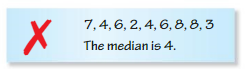
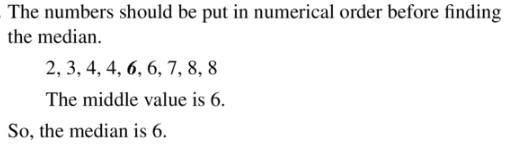
Describe and right the fault in finding the median of the data set.
Answer:
Question 30.
Error ANALYSIS
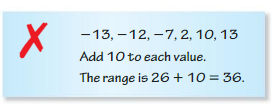
Describe and correct the error in finding the range of the information prepare later the given transformation.
Answer:
Question 31.
Problem SOLVING
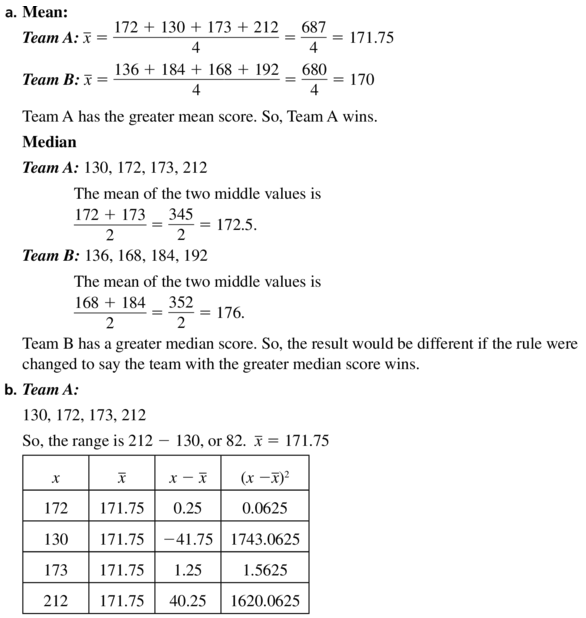
In a bowling match, the squad with the greater hateful score wins. The scores of the members of two bowling teams are shown.
Team A: 172, 130, 173, 212
Squad B: 136, 184, 168, 192
a. Which squad wins the match? If the team with the greater median score wins, is the result the aforementioned? Explain.
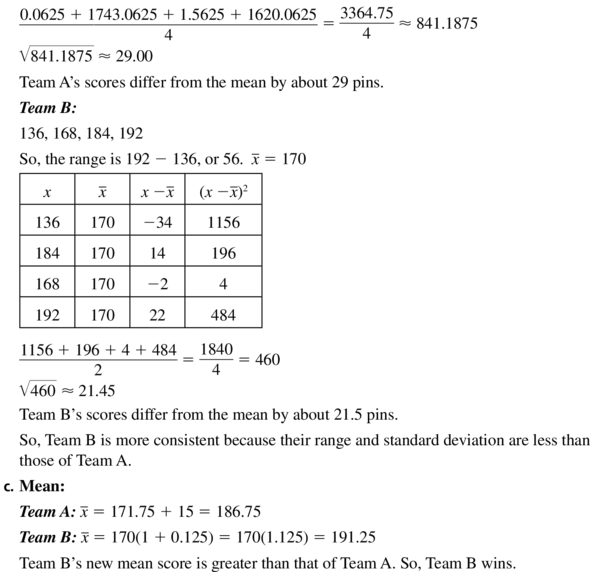
b. Which team is more consequent? Explicate.
c. In some other lucifer between the two teams, all the members of Team A increment their scores by xv and all the members of Team B increase their scores past 12.v%. Which team wins this friction match? Explain.
Answer:
Question 32.
MAKING AN Argument
Your friend says that when 2 data sets accept the aforementioned range, you tin presume the information sets have the same standard deviation, because both range and standard difference are measures of variation. Is your friend correct? Explain.
Answer:
Question 33.
ANALYZING Information
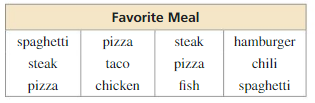
The table shows the results of a survey that asked 12 students about their favorite meal. Which measure of heart (mean, median, or manner) can be used to describe the data? Explain.
Answer:

Question 34.
HOW DO Yous SEE Information technology?
The dot plots evidence the ages of the members of three different adventure clubs. Without performing calculations, which data set has the greatest standard deviation? Which has the least standard difference? Explain your reasoning.
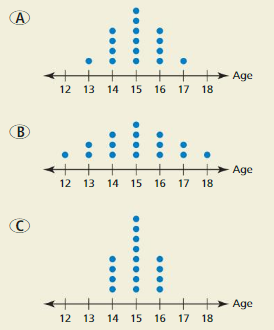
Respond:
Question 35.
REASONING
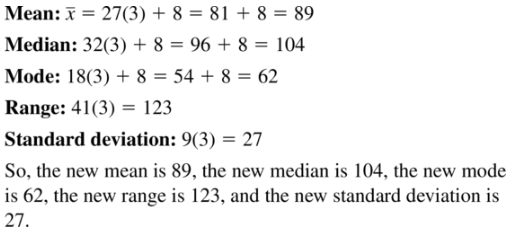
A information set is described by the measures shown.
Mean: 27
Median: 32
Mode: 18
Range: 41
Standard deviation: 9
Find the mean, median, mode, range, and standard departure of the data set up when each information value is multiplied past three and then increased by 8.
Answer:
Question 36.
CRITICAL THINKING
Can the standard departure of a information set exist 0? Can it exist negative? Explain.
Reply:
Question 37.
USING TOOLS
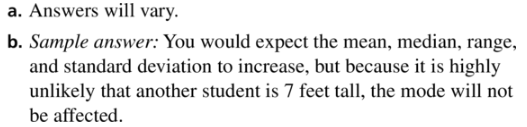
Measure the heights (in inches) of the students in your class.
a. Find the mean, median, mode, range, and standard difference of the heights.
b. A new student who is vii feet alpine joins your class. How would you expect this pupil'due south height to affect the measures in role (a)? Verify your reply.
Answer:
Question 38.
Thought PROVOKING
To find the arithmetic mean of n numbers, divide the sum of the numbers past n. To observe the geometric mean of n numbers ai, a2, a3, . . . , adue north, take the nth root of the product of the numbers.
geometric mean = \(\sqrt[due north]{a_{one} \cdot a_{2} \cdot a_{3} \cdot \ldots \cdot a_{n}}\)
Compare the arithmetic hateful to the geometric mean of north numbers.
Answer:
Question 39.
PROBLEM SOLVING
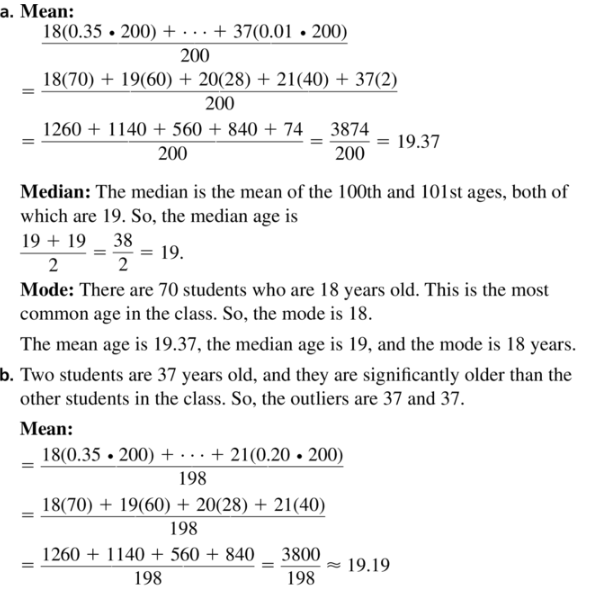
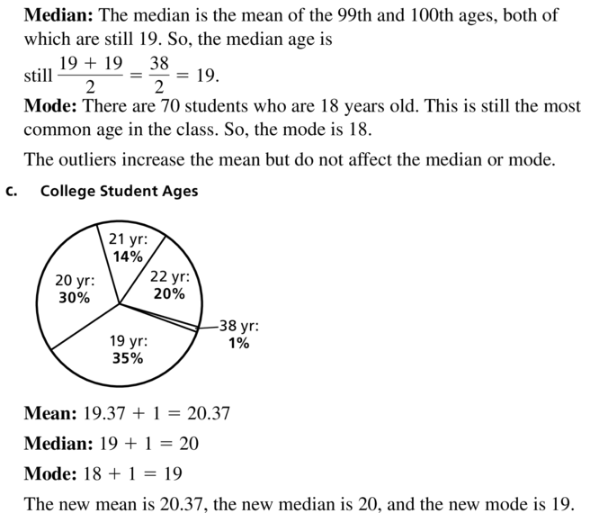
The circumvolve graph shows the distribution of the ages of 200 students in a college Psychology I class.
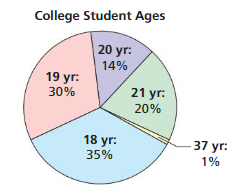
a. Find the mean, median, and mode of the students' ages.
b. Identify the outliers. How do the outliers touch the hateful, median, and mode?
c. Suppose all 200 students take the same Psychology Two class exactly i year subsequently. Draw a new circle graph that shows the distribution of the ages of this class and find the mean, median, and mode of the students' ages.
Answer:
Maintaining Mathematical Proficiency
Solve the inequality.(Section 2.iv)
Question 40.
6x + 1 ≤ 4x – nine
Respond:
Question 41.
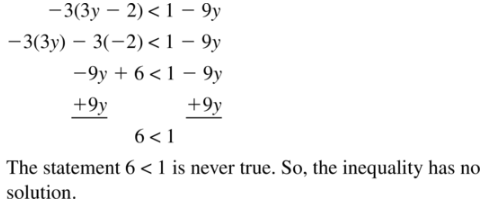
-3(3y – 2) < 1 – 9y
Respond:
Question 42.
2(5c – iv) ≥ five(2c + 8)
Answer:
Question 43.
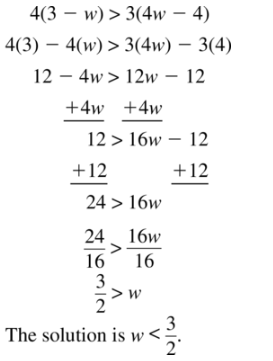
4(3 – west) > 3(4w – 4)
Respond:
Evaluate the function for the given value of x.(Department half dozen.three)
Question 44.
f(ten) – ivx; x = 3
Answer:
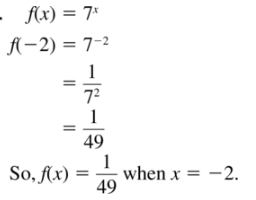
Question 45.
f(x) = 7x; 10 = -2
Answer:
Question 46.
f(x) = 5(ii)x; ten = six
Reply:
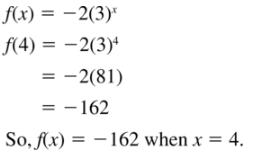
Question 47.
f(x) = -2(iii)10; 10 = 4
Answer:
Lesson 11.2 Box-and-Whisker Plots
Essential Question How can you lot use a box-and-whisker plot to describe a information prepare?
EXPLORATION 1
Drawing a Box-and-Whisker Plot
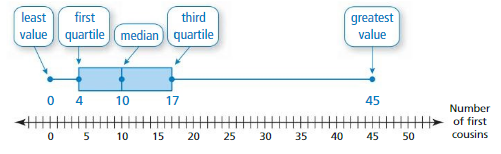
Work with a partner. The numbers of start cousins of the students in a 9th-class class are shown. A box-and-whisker plot is one manner to correspond the information visually.
a. Social club the data on a strip of grid paper with 24 equally spaced boxes. Fold the newspaper in half to find the median.

b. Fold the paper in one-half again to divide the data into iv groups. Considering there are 24 numbers in the data set, each grouping should have 6 numbers. Discover the least value, the greatest value, the showtime quartile, and the 3rd quartile.

c. Explain how the box-and-whisker plot shown represents the data set up.
Answer:
CommunicateYour Answer
Question 2.
How can you use a box-and-whisker plot to describe a data prepare?
Answer:
Question 3.
Interpret each box-and-whisker plot.
a. body mass indices (BMI) of students in a ninth-grade course

b. heights of roller coasters at an amusement park

Answer:
Monitoring Progress
Question i.
A basketball game player scores fourteen, 16, xx, five, 22, 30, 16, and 28 points during a tournament. Brand a box-and-whisker plot that represents the data.
Answer:
Apply the box-and-whisker plot in Example 1.
Question two.
Find and translate the range and interquartile range of the data.
Answer:
Question three.
Depict the distribution of the information.
Answer:
Question 4.
The double box-and-whisker plot represents the surfboard prices at Store A and Shop B. Identify the shape of each distribution. Which store'south prices are more spread out? Explicate.

Respond:
Box-and-Whisker Plots 11.2 Exercises
Vocabulary and Core Concept Check
Question 1.
WRITING
Describe how to find the beginning quartile of a data set.
Answer:

Question two.
DIFFERENT WORDS, Same QUESTION
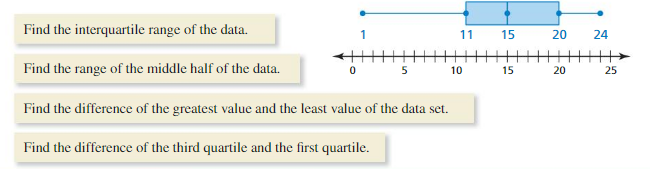
Consider the box-and-whisker plot shown. Which is different? Observe "both" answers.
Respond:
Monitoring Progress and Modeling with Mathematics
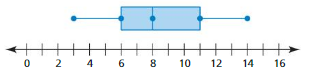
In Exercises three–8, utilise the box-and-whisker plot to find the given measure out.
Question 3.
to the lowest degree value
Answer:

Question 4.
greatest value
Answer:
Question five.
tertiary quartile
Reply:

Question half-dozen.
first quartile
Respond:
Question 7.
median
Answer:

Question 8.
range
Answer:
In Exercises 9–12, make a box-and-whisker plot that represents the data.
Question ix.
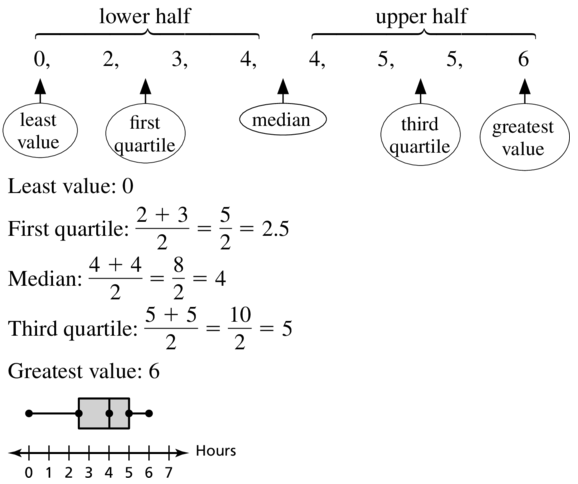
Hours of television watched: 0, 3, 4, 5, 2, iv, vi, 5
Answer:
Question 10.
Cat lengths (in inches): 16, eighteen, xx, 25, 17, 22, 23, 21
Answer:
Question xi.
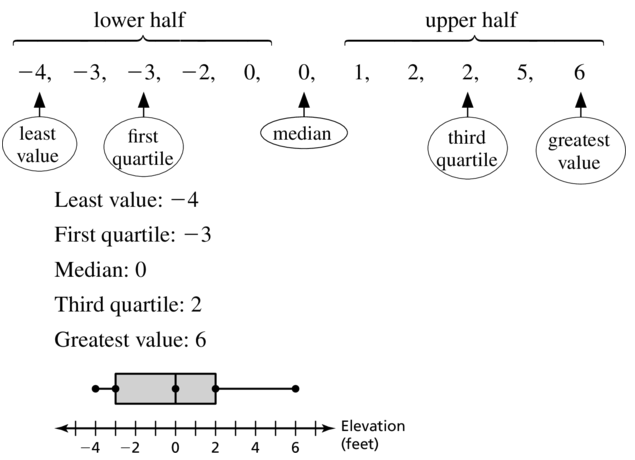
Elevations (in feet): -2, 0, five, -iv, one, -iii, 2, 0, ii, -3, half-dozen
Answer:
Question 12.
MP3 player prices (in dollars): 124, 95, 105, 110, 95, 124, 300, 190, 114
Respond:
Question xiii.
ANALYZING Data
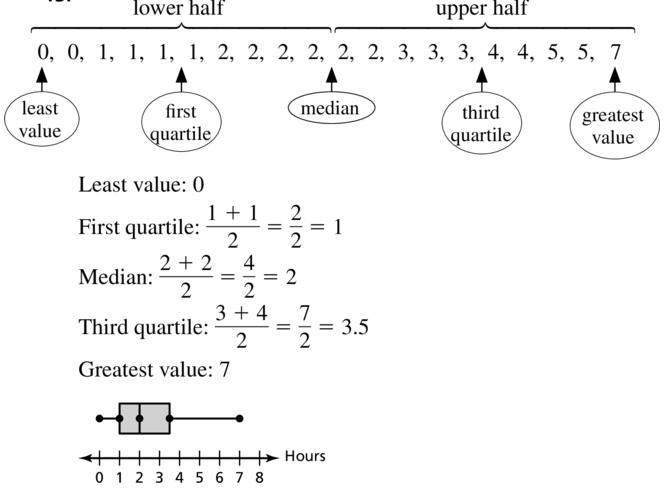
The dot plot represents the numbers of hours students spent studying for an exam. Make a box-and-whisker plot that represents the data.
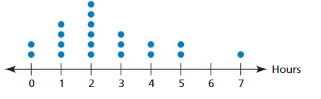
Answer:
Question 14.
ANALYZING Data
The stalk-and-leafage plot represents the lengths (in inches) of the fish caught on a fishing trip. Make a box-and-whisker plot that represents the information.
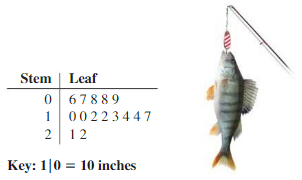
Reply:
Question 15.
ANALYZING Information
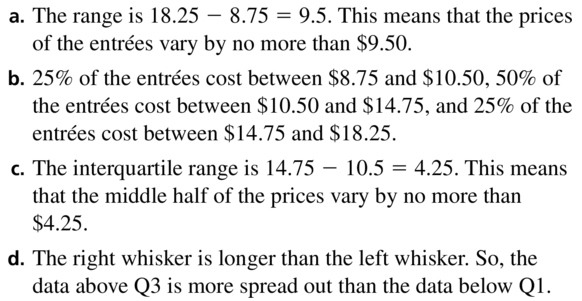
The box-and-whisker plot represents the prices (in dollars) of the entrées at a restaurant.
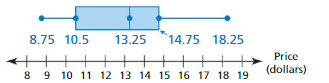
a. Notice and interpret the range of the data.
b. Describe the distribution of the data.
c. Notice and translate the interquartile range of the information.
d. Are the data more spread out beneath Q1 or higher up or Q3? Explain.
Answer:
Question xvi.
ANALYZING DATA
A baseball player scores 101 runs in a flavor. The box-and-whisker plot represents the numbers of runs the player scores against different opposing teams.
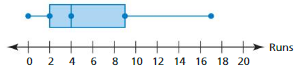
a. Find and interpret the range and interquartile range of the data.
b. Describe the distribution of the information. c. Are the data more spread out between Q1 and Q2 or between Q2 and Q3? Explain.
Answer:
Question 17.
ANALYZING DATA
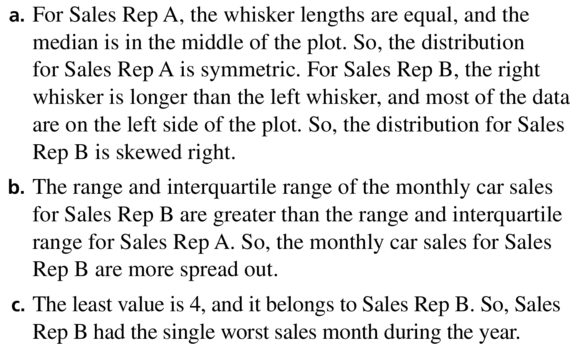
The double box-and-whisker plot represents the monthly car sales for a year for two sales representatives.
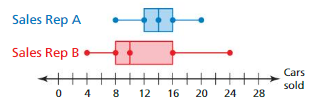
a. Place the shape of each distribution.
b. Which representative's sales are more than spread out? Explicate.
c. Which representative had the unmarried worst sales month during the year? Explain.
Answer:
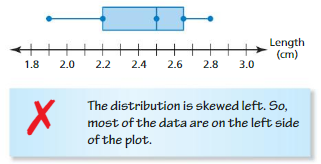
Question xviii.
ERROR ANALYSIS
Describe and right the fault in describing the box-and-whisker plot.
Answer:
Question 19.
WRITING
Given the numbers 36 and 12, place which number is the range and which number is the interquartile range of a data set. Explain.
Answer:

Question xx.
HOW DO YOU SEE Information technology?
The box-and-whisker plot represents a data set. Determine whether each argument is ever true. Explain your reasoning.
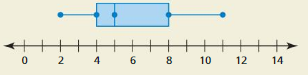
a. The information set contains the value 11.
b. The information set contains the value six.
c. The distribution is skewed right.
d. The hateful of the data is 5.
Answer:
Question 21.
ANALYZING DATA
The double box-and-whisker plot represents the battery lives (in hours) of two brands of cell phones.
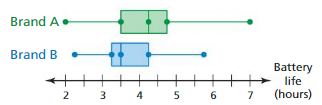
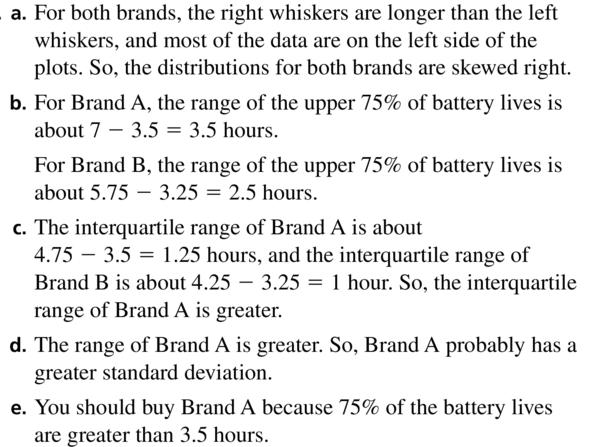
a. Place the shape of each distribution.
b. What is the range of the upper 75% of each make?
c. Compare the interquartile ranges of the two information sets.
d. Which brand do y'all think has a greater standard deviation? Explain.
e. You need a cell phone that has a battery life of more than iii.5 hours most of the time. Which make should yous buy? Explain.
Answer:
Question 22.
THOUGHT PROVOKING
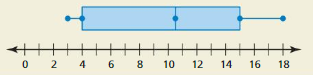
Create a data set that can be represented past the box-and-whisker plot shown. Justify your answer.
Answer:
Question 23.
CRITICAL THINKING
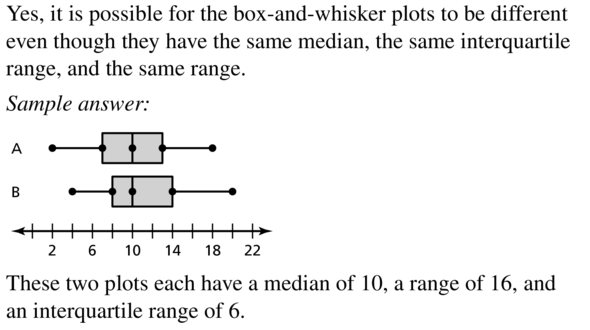
Two information sets have the same median, the aforementioned interquartile range, and the same range. Is it possible for the box-and-whisker plots of the data sets to be unlike? Justify your answer.
Reply:
Maintaining Mathematical Proficiency
Employ zeros to graph the function. (Section 8.5)
Question 24.
f(10) = -2(x + 9)(ten – 3)
Answer:
Question 25.
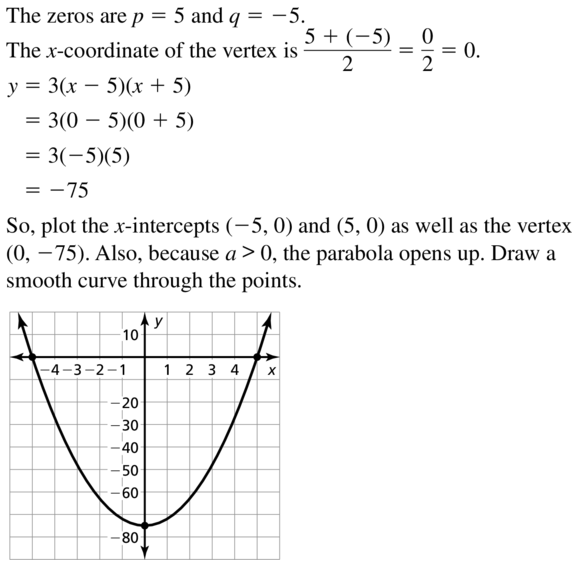
y = three(x – 5)(10 + 5)
Answer:
Question 26.
y = 4x2 – 16x = 48
Answer:
Question 27.
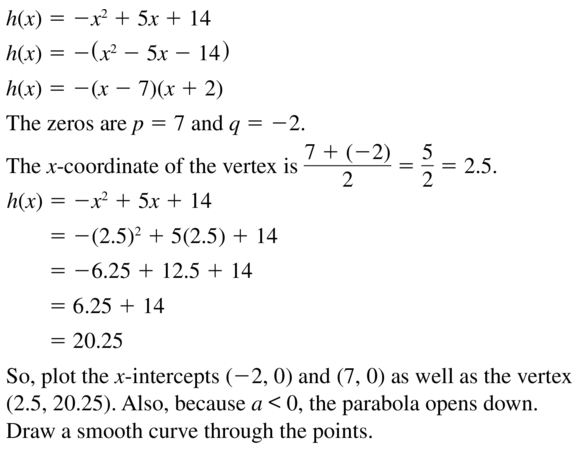
h(x) = -x2 + 5x + xiv
Answer:
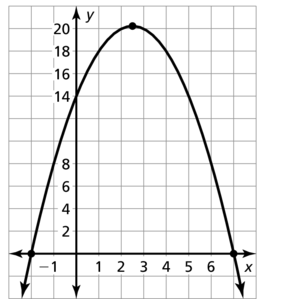
Lesson 11.3 Shapes of Distributions
Essential Question How tin you utilise a histogram to characterize the bones shape of a distribution?
EXPLORATION i
Analyzing a Famous Symmetric Distribution
Work with a partner. A famous data set was collected in Scotland in the mid-1800s. Information technology contains the breast sizes, measured in inches, of 5738 men in the Scottish Militia. Judge the percent of the chest sizes that prevarication within (a) 1 standard deviation of the mean, (b) ii standard deviations of the mean, and (c) 3 standard deviations of the hateful. Explain your reasoning.
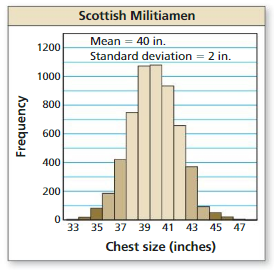
Reply:
EXPLORATION 2
Comparing Two Symmetric Distributions
Work with a partner. The graphs show the distributions of the heights of 250 developed American males and 250 adult American females.
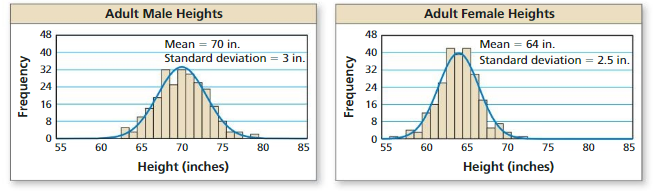
Answer:
a. Which data set has a smaller standard deviation? Explain what this means in the context of the trouble.
b. Estimate the percent of male heights between 67 inches and 73 inches.
Answer:
CommunicateYour Answer
Question 3.
How can you use a histogram to narrate the basic shape of a distribution?
Reply:
Question 4.
All three distributions in Explorations 1 and 2 are roughly symmetric. The histograms are called "bell-shaped."
a. What are the characteristics of a symmetric distribution?
b.Why is a symmetric distribution called "bell-shaped?"
c. Give two other real-life examples of symmetric distributions.Shapes of Distributions.
Respond:
Monitoring Progress
Question 1.
The frequency table shows the numbers of pounds of aluminum cans nerveless by classes for a fundraiser. Display the data in a histogram. Describe the shape of the distribution.
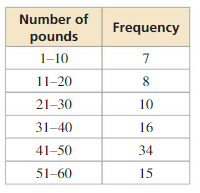
Answer:
Question 2.
You record the numbers of electronic mail attachments sent past xxx employees of a visitor in one week. Your results are shown in the table. (a) Brandish the data in a histogram using six intervals beginning with ane–20. (b) Which measures of eye and variation best correspond the data? Explicate.
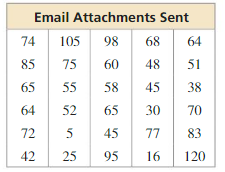
Answer:
Question 3.
Compare the distributions using their shapes and appropriate measures of centre and variation.
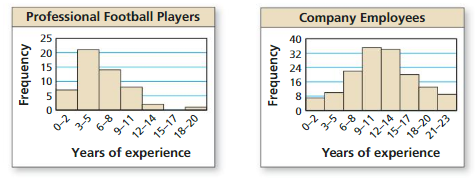
Reply:
Question 4.
Why is the mean greater than the median for the men?
Answer:
Question 5.
If 50 more women are surveyed, nearly how many more would you lot expect to own between x and 18 pairs of shoes?
Reply:
Shapes of Distributions xi.three Exercises
Vocabulary and Core Concept Cheque
Question i.
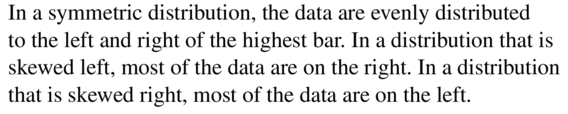
VOCABULARY
Describe how information are distributed in a symmetric distribution, a distribution that is skewed left, and a distribution that is skewed right.
Answer:
Question two.
WRITING
How does the shape of a distribution help you decide which measures of center and variation best draw the data?
Answer:
Monitoring Progress and Modeling with Mathematics
Question three.
DESCRIBING DISTRIBUTIONS
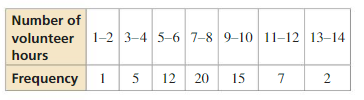
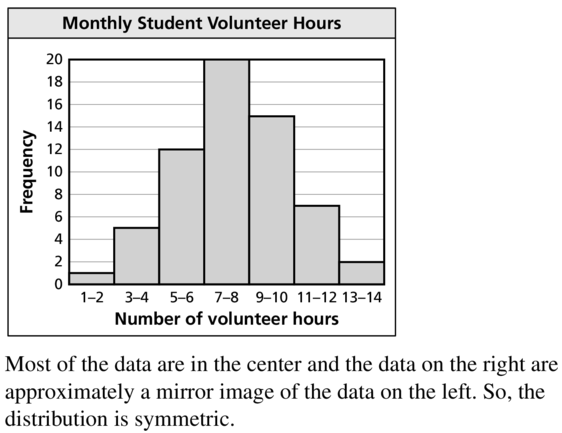
The frequency table shows the numbers of hours that students volunteer per month. Display the data in a histogram. Describe the shape of the distribution.
Answer:
Question 4.
DESCRIBING DISTRIBUTIONS
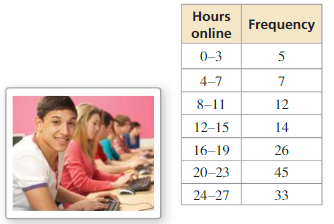
The frequency table shows the results of a survey that asked people how many hours they spend online per week. Display the data in a histogram. Describe the shape of the distribution.
Answer:
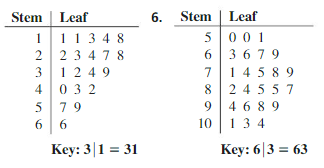
In Exercises 5 and six, describe the shape of the distribution of the information. Explain your reasoning.
Question 5.
Reply:

In Exercises 7 and 8, determine which measures of center and variation best represent the data. Explain your reasoning.
Question 7.
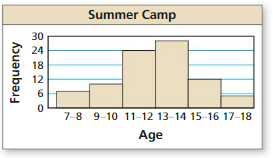
Answer:
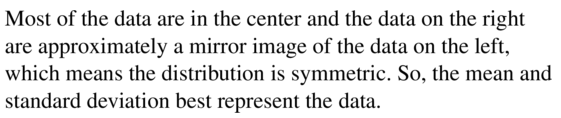
Question 8.
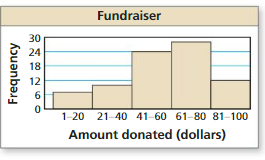
Answer:
Question ix.
ANALYZING Data
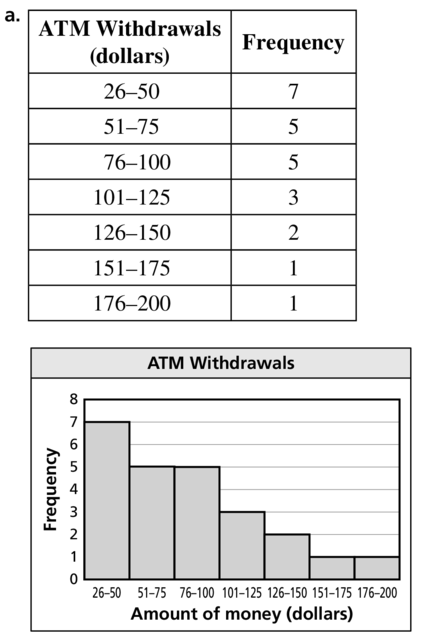
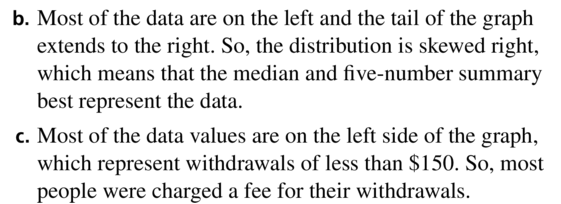
The table shows the final 24 ATM withdrawals at a depository financial institution.
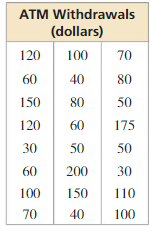
a. Display the data in a histogram using seven intervals first with 26–50.
b. Which measures of center and variation best stand for the data? Explain.
c. The banking company charges a fee for any ATM withdrawal less than $150. How would you interpret the data?
Answer:
Question ten.
ANALYZING DATA
Measuring an IQ is an inexact science. However, IQ scores have been around for years in an endeavour to measure human intelligence. The table shows some of the greatest known IQ scores.
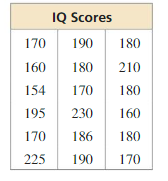
a. Display the data in a histogram using five intervals get-go with 151–166.
b. Which measures of center and variation all-time stand for the data? Explicate.
c. The distribution of IQ scores for the human being population is symmetric. What happens to the shape of the distribution in role (a) as you lot include more and more IQ scores from the man population in the data set up?
Answer:
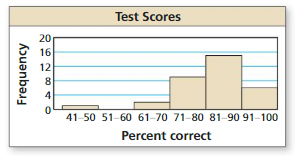
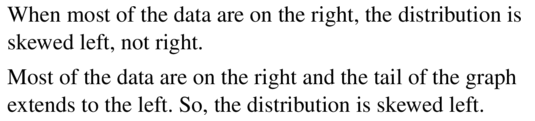
ERROR ANALYSIS In Exercises 11 and 12, draw and right the error in the statements near the data displayed in the histogram.
Question 11.
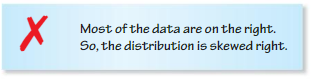
Reply:
Question 12.
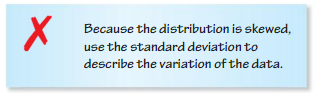
Respond:
Question 13.
USING TOOLS
For a large data gear up, would yous employ a stalk-and-leaf plot or a histogram to show the distribution of the information? Explicate.
Answer:

Question 14.
REASONING
For a symmetric distribution, why is the mean used to describe the center and the standard deviation used to describe the variation? For a skewed distribution, why is the median used to depict the center and the ve-number summary used to describe the variation?
Answer:
Question 15.
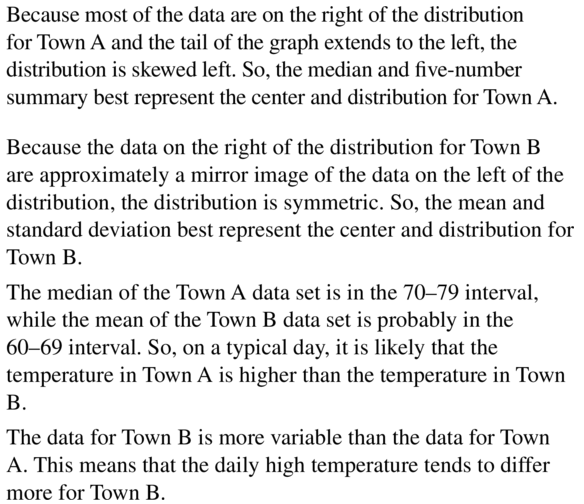
COMPARING DATA SETS
The double histogram shows the distributions of daily high temperatures for two towns over a 50-day period. Compare the distributions using their shapes and appropriate measures of center and variation.
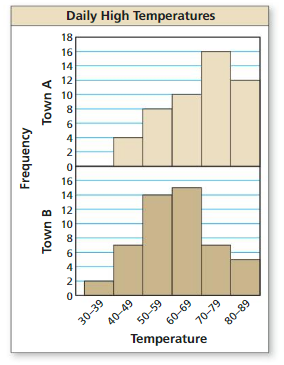
Answer:
Question 16.
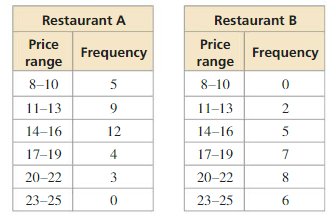
COMPARING DATA SETS
The frequency tables show the numbers of entrées in sure price ranges (in dollars) at ii different restaurants. Brandish the data in a double histogram. Compare the distributions using their shapes and appropriate measures of center and variation.
Respond:
Question 17.
OPEN-Ended
Describe a existent-life data set that has a distribution that is skewed right.
Respond:

Question 18.
Open up-ENDED
Describe a existent-life data set that has a distribution that is skewed left.
Reply:
Question xix.
Comparing Data SETS
The table shows the results of a survey that asked freshmen and sophomores how many songs they take downloaded on their MP3 players.
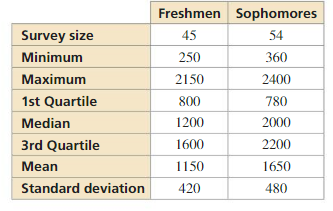
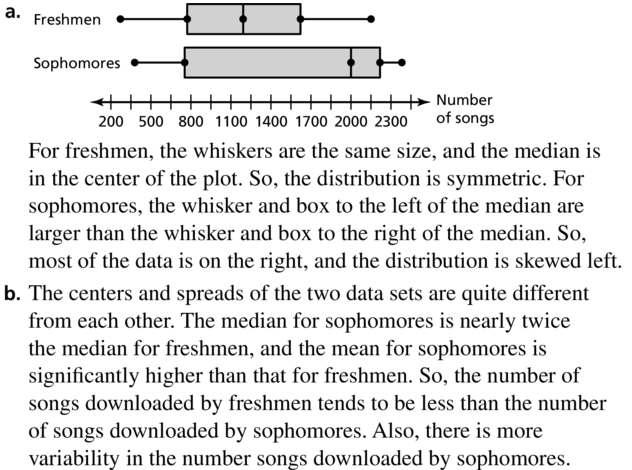
a. Brand a double box-and-whisker plot that represents the data. Draw the shape of each distribution.
b. Compare the number of songs downloaded by freshmen to the number of songs downloaded by sophomores.
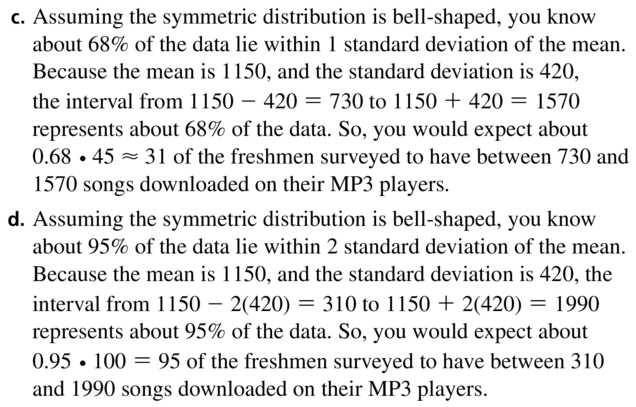
c. Nigh how many of the freshmen surveyed would you wait to accept between 730 and 1570 songs downloaded on their MP3 players?
d. If you survey100 more freshmen, about how many would you expect to accept downloaded between 310 and 1990 songs on their MP3 players?
Answer:
Question 20.
Comparing Information SETS
Yous conduct the same survey as in Exercise 19 but use a different group of freshmen. The results are as follows.Survey size: 60; minimum: 200; maximum: 2400; 1st quartile: 640; median: 1670; 3rd quartile: 2150; mean: 1480; standard deviation: 500
a. Compare the number of songs downloaded by this group of freshmen to the number of songs downloaded by sophomores.
b. Why is the median greater than the mean for this grouping of freshmen?
Reply:
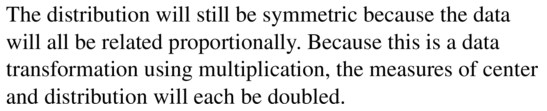
Question 21.
REASONING
A data set has a symmetric distribution. Every value in the data set is doubled. Describe the shape of the new distribution. Are the measures of eye and variation affected? Explain.
Answer:
Question 22.
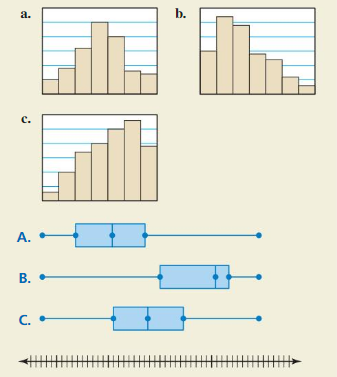
HOW Do You Run into IT?
Match the distribution with the corresponding box-and-whisker plot.
Answer:
Question 23.
REASONING
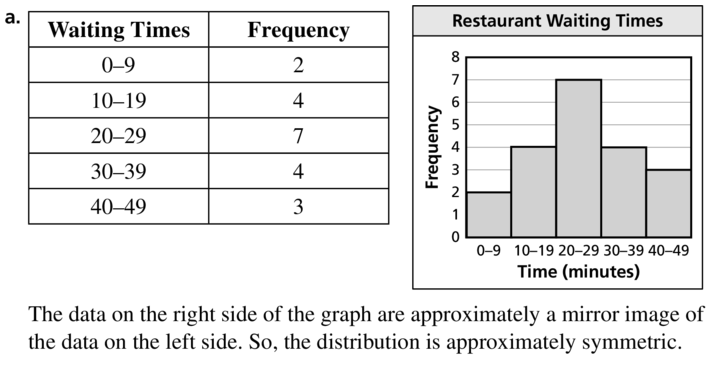
You record the following waiting times at a eating place.
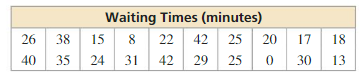
a. Display the data in a histogram using five intervals get-go with 0–9. Describe the shape of the distribution.
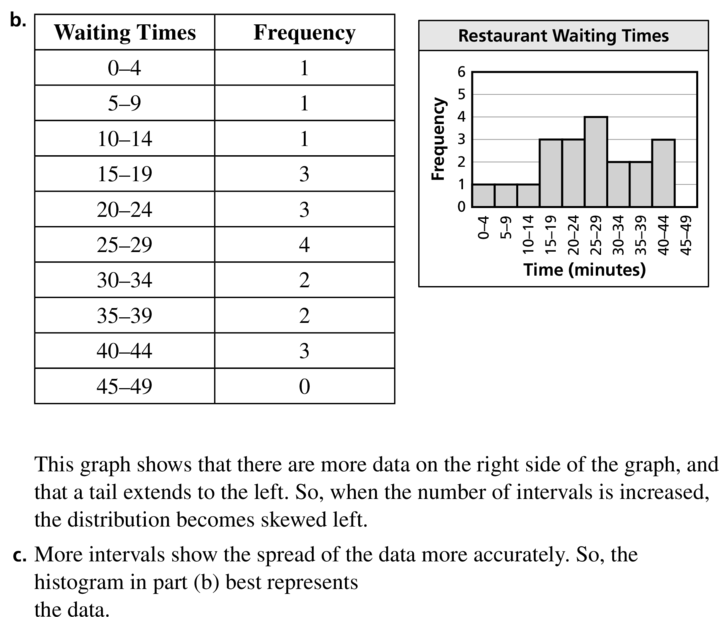
b. Brandish the data in a histogram using 10 intervals beginning with 0–4. What happens when the number of intervals is increased?
c. Which histogram best represents the data? Explain your reasoning.
Answer:
Question 24.
THOUGHT PROVOKING
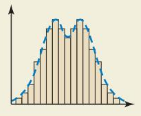
The shape of a bimodal distribution is shown. Describe a existent-life example of a bimodal distribution.
Answer:
Maintaining Mathematical Proficiency
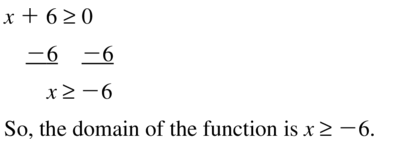
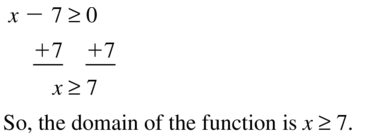
Notice the domain of the function.(Section x.ane)
Question 25.
f(x) = \(\sqrt{x+half-dozen}\)
Answer:
Question 26.
f(10) = \(\sqrt{2x}\)
Answer:
Question 27.
f(x) = \(\frac{1}{4} \sqrt{ten-7}\)
Respond:
Data Analysis and Displays Study Skills: Studying for Finals
xi.1–11.3What Did YouLearn?
Core Vocabulary

Cadre Concepts
Mathematical Practices
Question 1.
Exercises fifteen and 16 on page 590 are similar. For each data set, is the outlier much greater than or much less than the remainder of the data values? Compare how the outliers affect the means. Explain why this makes sense.
Answer:
Question two.
In Exercise 18 on page 605, provide a possible reason for why the distribution is skewed left.
Answer:

Data Assay and Displays 1.1–eleven.3 Quiz
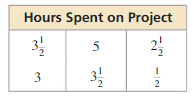
Find the mean, median, and mode of the data ready. Which measure out of eye best represents the data? Explain.(Section 11.1)
Question 1.
Answer:
Question 2.
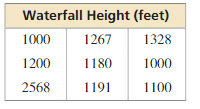
Answer:
Detect the range and standard departure of each data set up. Then compare your results.(Section 11.1)
Question three.
Absent students during a week of school
Female: 6, ii, 4, 3, 4
Male: 5, 3, 6, half dozen, 9
Respond:
Question iv.
Numbers of points scored
Juniors: 19, 15, twenty, x, 14, 21, 18, 15
Seniors: 22, 19, 29, 32, 15, 26, 30, 19
Respond:
Make a box-and-whisker plot that represents the data.(Section 11.ii)
Question 5.
Ages of family members:
sixty, 15, 25, twenty, 55, 70, twoscore, 30
Reply:
Question vi.
Minutes of violin practice:
20, 50, sixty, 40, 40, 30, 60, 40, 50, 20, 20, 35
Answer:
Question seven.
Display the data in a histogram. Describe the shape of the distribution. (Section xi.iii)

Question 8.
The tabular array shows the prices of eight mountain bikes in a sporting goods store. (Section xi.1 and Section 11.two)

a. Find the mean, median, manner, range, and standard deviation of the prices.
b. Identify the outlier. How does the outlier touch the mean, median, and mode?
c. Brand a box-and-whisker plot that represents the data. Notice and interpret the interquartile range of the data. Place the shape of the distribution.
d. Find the mean, median, mode, range, and standard deviation of the prices when the store offers a five% discount on all mountain bikes.
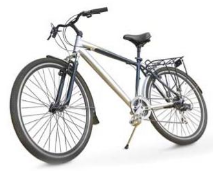
Answer:
Question nine.
The table shows the times of twenty presentations. (Section 11.3)
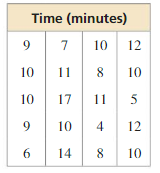
a. Display the data in a histogram using v intervals beginning with 3–5.
b. Which measures of heart and variation best represent the data? Explicate.
c. The presentations are supposed to be 10 minutes long. How would you translate these results?
Reply:
Lesson 11.iv Two-Way Tables
Essential Question How tin can you lot read and make a two-way table?
EXPLORATION 1
Reading a 2-Way Table
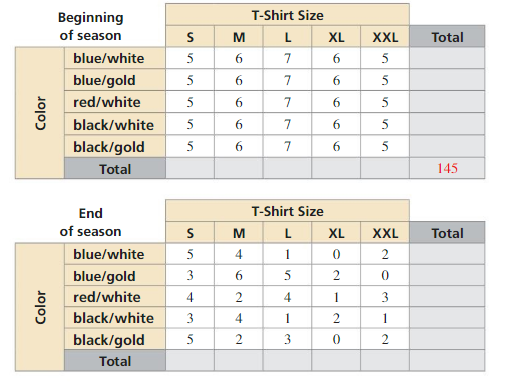
Work with a partner. You are the manager of a sports store. The ii-manner tables testify the numbers of soccer T-shirts in stock at your shop at the beginning and finish of the selling season. (a) Complete the totals for the rows and columns in each table. (b) How would you lot modify the number of T-shirts y'all social club for next season? Explicate your reasoning.
Answer:
EXPLORATION 2
Making a Two-Way Table
Work with a partner. The three-dimensional bar graph shows the numbers of hours students work at part-time jobs.
a. Brand a two-manner tabular array showing the data. Utilize estimation to find the entries in your table.
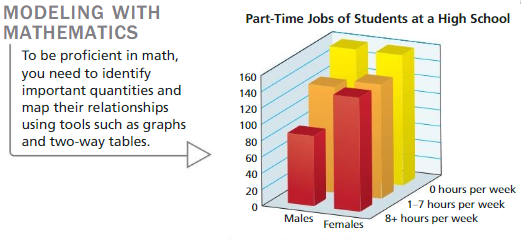
b. Write two observations that summarize the data in your table.
Answer:
Communicate Your Respond
Question iii.
How tin y'all read and make a two-way tabular array?
Answer:
Monitoring Progress
Question ane.
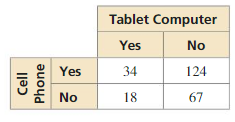
You conduct a applied science survey to publish on your schoolhouse'southward website. Yous survey students in the school cafeteria about the technological devices they own. The results are shown in the 2-style table. Discover and translate the marginal frequencies.
Answer:
Question ii.
You survey students about whether they are getting a summer job. Seventy-five males answer, with 18 of them responding "no." Fifty-7 females respond, with 45 of them responding "yeah." Organize the results in a two-way table. Include the marginal frequencies.
Reply:
Question three.
Employ the survey results in Monitoring Progress Question 2 to brand a two-way table that shows the joint and marginal relative frequencies. What percentage of students are not getting a summertime job?
Answer:
Question 4.
Employ the survey results in Example 3 to brand a two-manner tabular array that shows the conditional relative frequencies based on the row totals. Given that a student is a senior, what is the provisional relative frequency that he or she is planning to major in a medical field?
Answer:
Question 5.
Using the results of the survey in Monitoring Progress Question 1, is there an association between owning a tablet reckoner and owning a prison cell phone? Explain your reasoning.
Reply:
Two-Manner Tables 11.4 Exercises
Vocabulary and Core Concept Bank check
Question one.
COMPLETE THE Sentence
Each entry in a two-way tabular array is chosen a(due north) __________.
Answer:

Question 2.
WRITING
When is information technology appropriate to use a two-way table to organize information?
Answer:
Question 3.
VOCABULARY
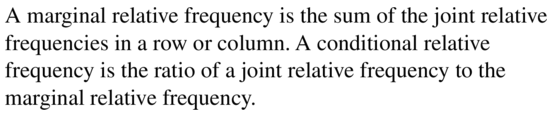
Explain the relationship between joint relative frequencies, marginal relative frequencies, and conditional relative frequencies.
Respond:
Question 4.
WRITING
Depict 2 ways you can discover conditional relative frequencies.
Answer:
Monitoring Progress and Modeling with Mathematics
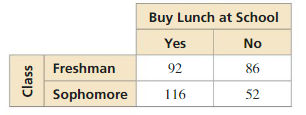
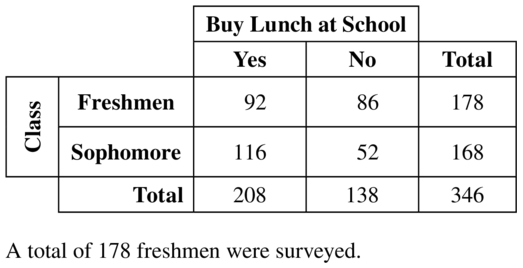
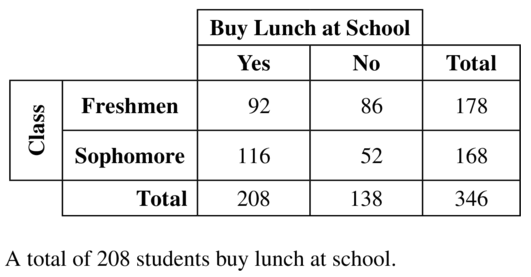
You bear a survey that asks 346 students whether they buy tiffin at school. In Exercises five–viii, employ the results of the survey shown in the two-fashion tabular array.
Question v.
How many freshmen were surveyed?
Answer:
Question 6.
How many sophomores were surveyed?
Answer:
Question 7.
How many students buy tiffin at schoolhouse?
Answer:
Question 8.
How many students exercise not buy lunch at school?
Answer:
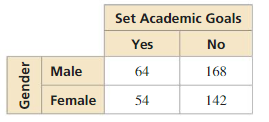
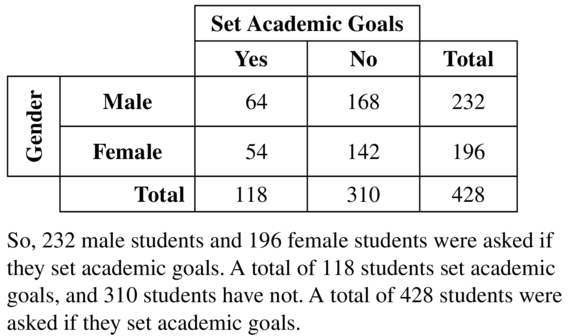
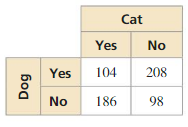
In Exercises 9 and 10, find and interpret the marginal frequencies.
Question 9.
Answer:
Question 10.
Answer:
Question 11.
USING TWO-Style TABLES
You conduct a survey that asks students whether they plan to participate in schoolhouse spirit week. The results are shown in the two-style table. Notice and interpret the marginal frequencies.
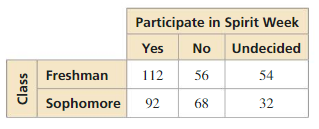
Answer:
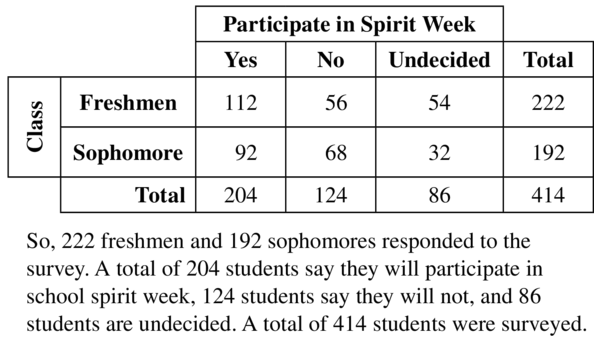
Question 12.
USING 2-WAY TABLES
You conduct a survey that asks college-bound high schoolhouse seniors about the type of degree they plan to receive. The results are shown in the two-way table. Find and interpret the marginal frequencies.
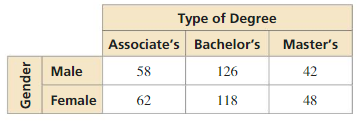
Answer:
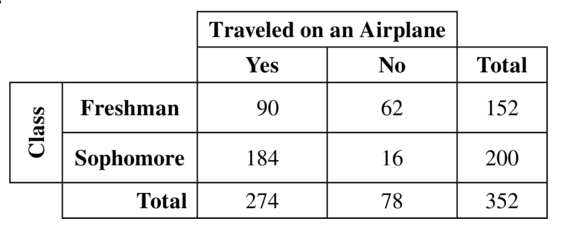
USING STRUCTURE In Exercises thirteen and 14, complete the two-fashion table..
Question 13.
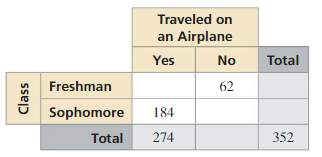
Answer:
Question 14.
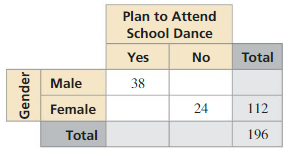
Answer:
Question xv.
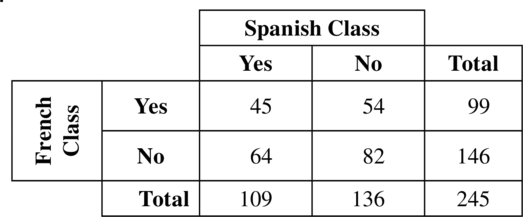
MAKING Two-WAY TABLES
Yous conduct a survey that asks 245 students in your school whether they have taken a Spanish or a French course. 1 hundred 9 of the students have taken a Castilian class, and 45 of those students take taken a French class. Lxxx-2 of the students have not taken a Spanish or a French class. Organize the results in a two-mode table. Include the marginal frequencies.
Answer:
Question xvi.
MAKING Two-WAY TABLES
A car dealership has 98 cars on its lot. L-five of the cars are new. Of the new cars, 36 are domestic cars. There are 15 used foreign cars on the lot. Organize this information in a two-manner table. Include the marginal frequencies. In Exercises 17 and 18, make a two-style tabular array that shows the joint and marginal relative frequencies.
Reply:
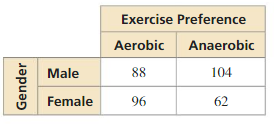
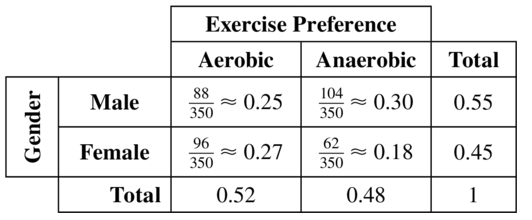
In Exercises 17 and 18, brand a two-fashion table that shows the articulation and marginal relative frequencies.
Question 17.
Answer:
Question 18.
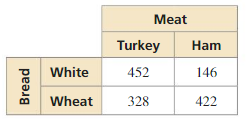
Answer:
Question nineteen.
USING TWO-WAY TABLES
Refer to Exercise 17. What per centum of students prefer aerobic exercise? What percent of students are males who prefer anaerobic exercise?
Answer:

Question twenty.
USING Two-Way TABLES
Refer to Practice 18. What percent of the sandwiches are on wheat breadstuff? What per centum of the sandwiches are turkey on white bread?
Answer:
Fault Analysis In Exercises 21 and 22, depict and correct the error in using the two-way table.
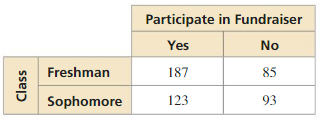
Question 21.
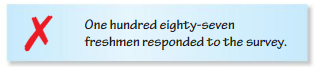
Answer:
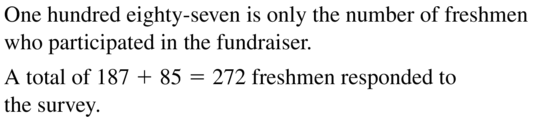
Question 22.
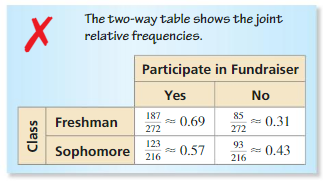
Answer:
Question 23.
USING TWO-Style TABLES
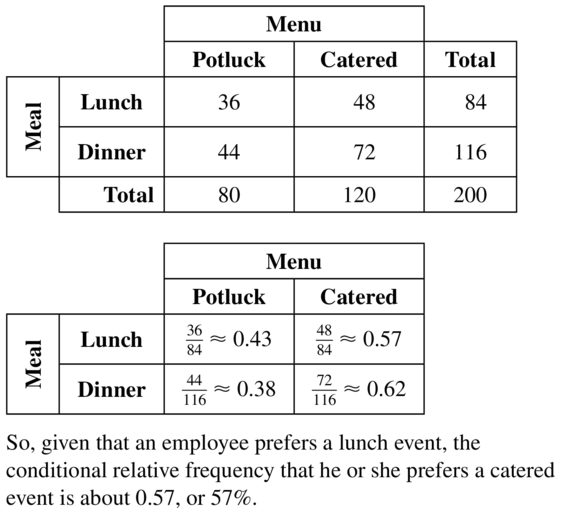
A company is hosting an event for its employees to celebrate the stop of the year. It asks the employees whether they prefer a luncheon consequence or a dinner event. It also asks whether they prefer a catered consequence or a potluck. The results are shown in the two-way table. Make a two-way tabular array that shows the conditional relative frequencies based on the row totals. Given that an employee prefers a lunch event, what is the conditional relative frequency that he or she prefers a catered effect?
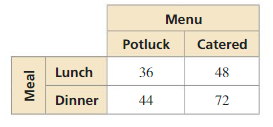
Respond:
Question 24.
USING Ii-WAY TABLES
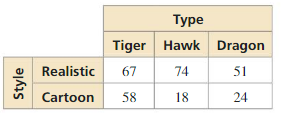
The two-way table shows the results of a survey that asked students nearly their preference for a new school mascot. Make a ii-way tabular array that shows the conditional relative frequencies based on the cavalcade totals. Given that a pupil prefers a hawk equally a mascot, what is the conditional relative frequency that he or she prefers a cartoon mascot?
Answer:
Question 25.
ANALYZING Ii-WAYTABLES
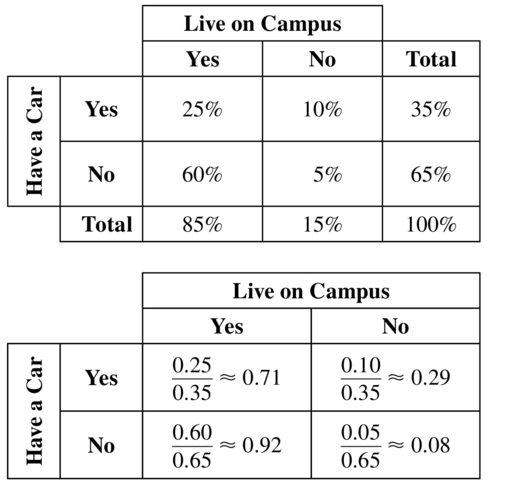
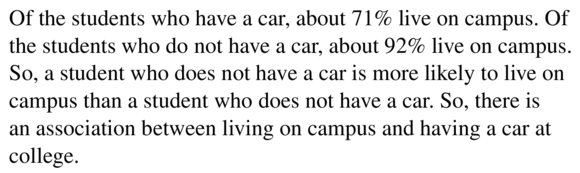
You lot survey college-bound seniors and discover that 85% plan to alive on campus, 35% plan to have a car while at college, and 5% program to live off campus and not take a car. Is there an association between living on campus and having a car at college? Explain.
Answer:
Question 26.
ANALYZING Two-WAYTABLES
You lot survey students and discover that 70% watch sports on Idiot box, 48% participate in a sport, and sixteen% do not watch sports on TV or participate in a sport. Is at that place an association betwixt participating in a sport and watching sports on TV? Explain.
Respond:
Question 27.
ANALYZING Ii-Way TABLES
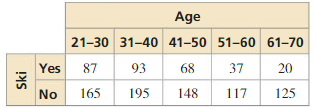
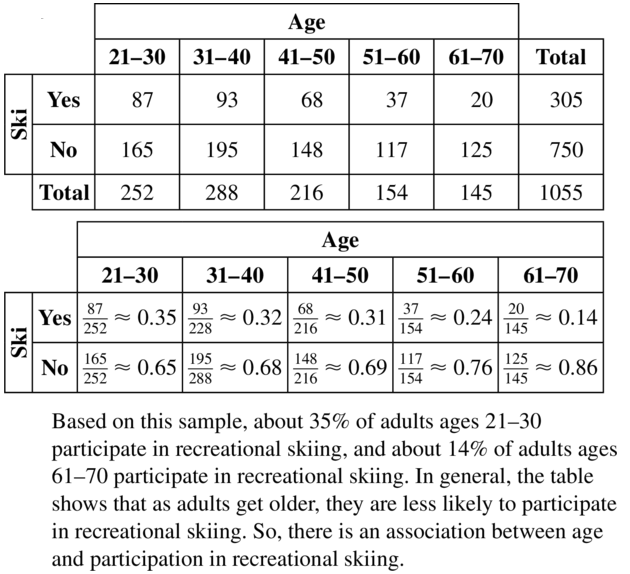
The 2-way table shows the results of a survey that asked adults whether they participate in recreational skiing. Is in that location an association betwixt historic period and recreational skiing?
Reply:
Question 28.
ANALYZING Ii-WAY TABLES
Refer to Practice 12. Is there an association betwixt gender and type of degree? Explain.
Respond:
Question 29.
WRITING
Compare Venn diagrams and two-style tables.
Answer:

Question thirty.
HOW Practise YOU See IT?
The graph shows the results of a survey that asked students about their favorite pic genre.
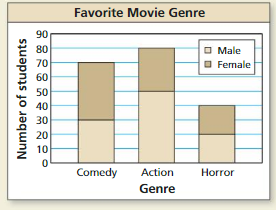
a. Brandish the given information in a 2-fashion table.
b. Which of the data displays practice you prefer? Explain.
Answer:
Question 31.
Problem SOLVING
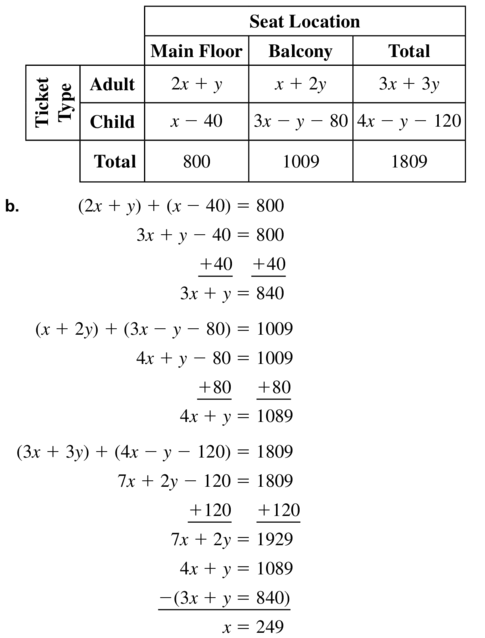
A box office sells 1809 tickets to a play, 800 of which are for the main floor. The tickets consist of 2x + y adult tickets on the main floor, x – 40 child tickets on the main flooring, ten + 2y developed tickets in the balcony, and 3x – y – 80 child tickets in the balcony.
a. Organize this information in a ii-manner table.
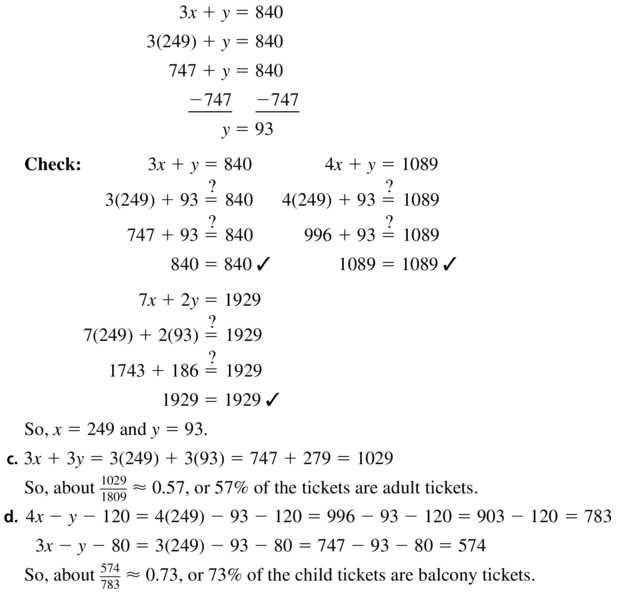
b. Find the values of x and y.
c. What percent of tickets are adult tickets?
d. What percent of kid tickets are balustrade tickets?
Answer:
Question 32.
Thought PROVOKING
Compare "one-way tables" and "two-style tables." Is it possible to have a "three-manner table?" If so, give an example of a three-mode table.
Respond:
Maintaining Mathematical Proficiency
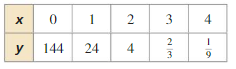
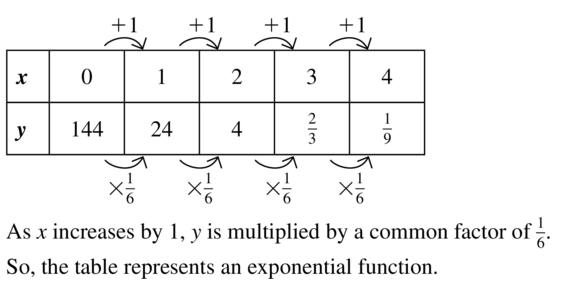
Tell whether the tabular array of values represents a linear, an exponential, or a quadratic function. (Section 8.6)
Question 33.
Answer:
Question 34.
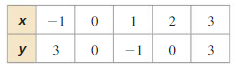
Answer:
Lesson 11.five Choosing a Data Display
Essential Question How can you brandish data in a manner that helps you make decisions?
EXPLORATION 1
Displaying Data
Work with a partner. Analyze the data and then create a display that best represents the data. Explain your choice of information display.
a. A group of schools in New England participated in a 2-month study and reported 3962 animals institute dead along roads.
birds: 307
mammals: 2746
amphibiAnswer: 145
reptiles: 75
unknown: 689
b. The data below show the numbers of black bears killed on a land'due south roads from 1993 to 2012.
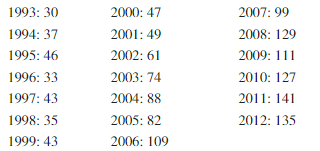
c. A i-week study forth a four-mile department of route establish the following weights (in pounds) of raccoons that had been killed by vehicles.
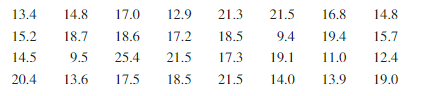
d. A yearlong study by volunteers in California reported the post-obit numbers of animals killed by motor vehicles.
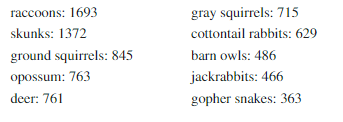
Answer:
Communicate Your Answer
Question 2.
How can you display data in a way that helps you brand decisions?
Answer:
Question three.
Employ the Cyberspace or some other reference to discover examples of the following types of data displays.
bar graph
circle graph
scatter plot
stem-and-leafage plot
pictograph
line graph
box-and-whisker plot
histogram
dot plot
Monitoring Progress
Tell whether the information are qualitative or quantitative. Explain your reasoning.
Question 1.
telephone numbers in a directory
Answer:
Question ii.
ages of patients at a hospital
Answer:
Question 3.
lengths of videos on a website
Reply:
Question 4.
types of flowers at a florist
Answer:
Question 5.
Display the data in Instance ii(a) in some other fashion.
Respond:
Question half-dozen.
Display the data in Example two(b) in another way.
Answer:
Question 7.
Redraw the graphs in Case 3 so they are not misleading.
Reply:
Choosing a Data Display 11.5 Exercises
Vocabulary and Core Concept Check
Question one.
Open up-Ended
Describe two ways that a line graph can be misleading.
Answer:

Question ii.
WHICH ONE DOESN'T BELONG?
Which information gear up does not belong with the other three? Explain your reasoning.

Answer:
Monitoring Progress and Modeling with Mathematics
In Exercises 3–8, tell whether the information are qualitative or quantitative. Explain your reasoning.
Question 3.
brands of cars in a parking lot
Answer:

Question four.
weights of bears at a zoo
Answer:
Question 5.
budgets of feature films
Answer:

Question six.
file formats of documents on a computer
Answer:
Question seven.
shoe sizes of students in your class
Answer:

Question 8.
street addresses in a phone book
Respond:
In Exercises ix–12, cull an appropriate information brandish for the situation. Explicate your reasoning.
Question nine.
the number of students in a marching band each year
Answer:

Question 10.
a comparison of students' grades (out of 100) in ii different classes
Answer:
Question xi.
the favorite sports of students in your class
Answer:

Question 12.
the distribution of teachers by age
Reply:
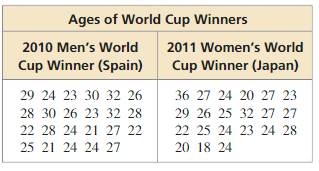
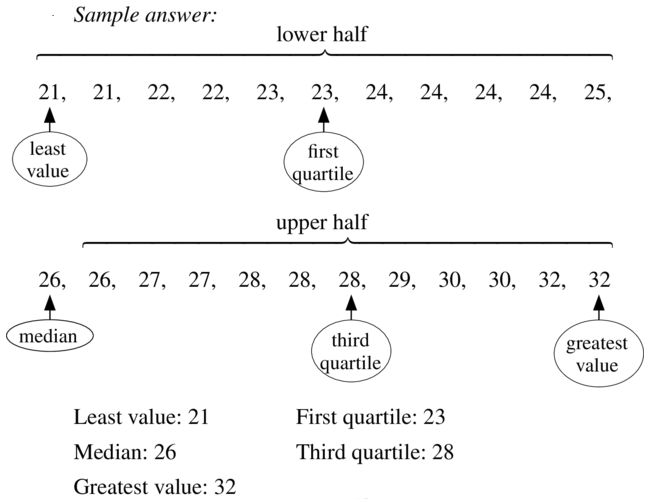
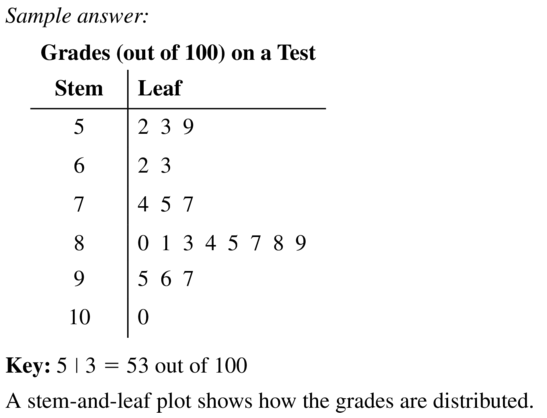
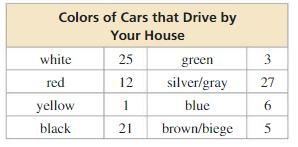
In Exercises 13–sixteen, analyze the data and so create a display that all-time represents the data. Explicate your reasoning.
Question 13.
Answer:
Question fourteen.
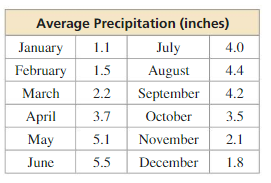
Answer:
Question 15.
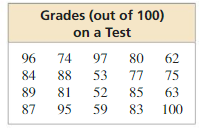
Answer:
Question sixteen.
Answer:
Question 17.
DISPLAYING Information
Display the data in Exercise thirteen in another mode.
Respond:
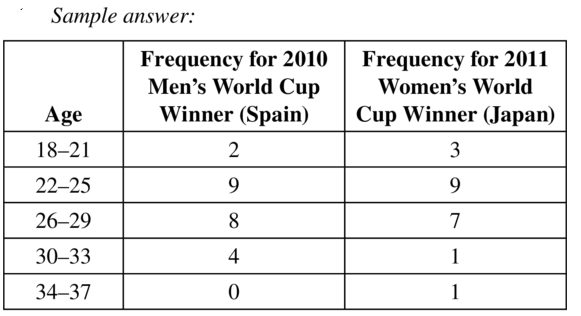
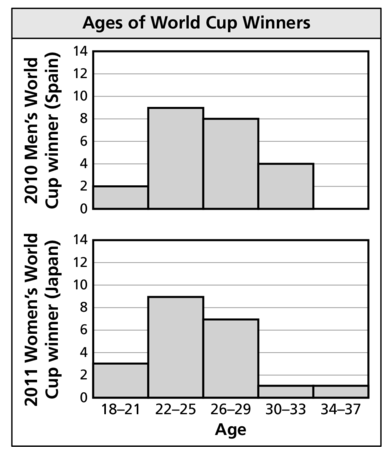
Question 18.
DISPLAYING Data
Display the data in Do fourteen in another way.
Answer:
Question 19.
DISPLAYING Data
Display the data in Do 15 in another mode.
Answer:
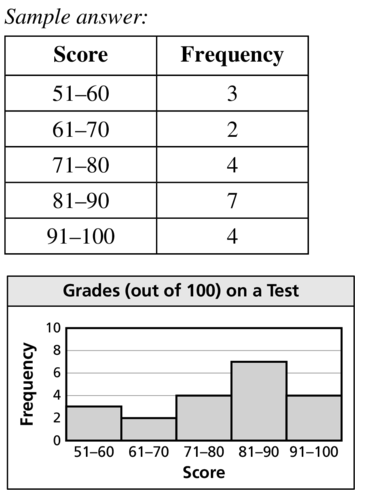
Question 20.
DISPLAYING DATA
Brandish the data in Do 16 in another way.
Respond:
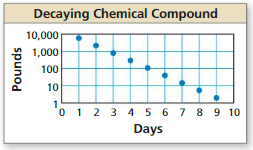
In Exercises 21–24, describe how the graph is misleading. And then explain how someone might misinterpret the graph.
Question 21.
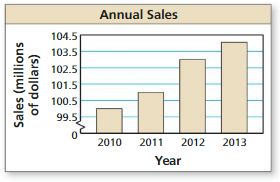
Reply:

Question 22.
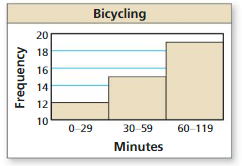
Answer:
Question 23.
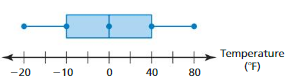
Answer:

Question 24.
Answer:
Question 25.
DISPLAYING DATA
Redraw the graph in Exercise 21 so it is not misleading.
Answer:
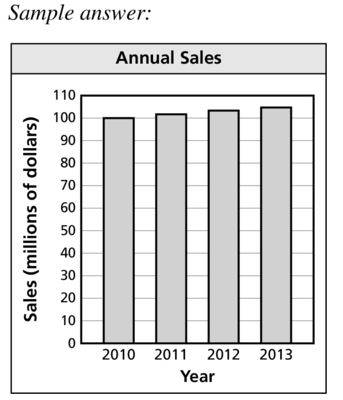
Question 26.
DISPLAYING Information
Redraw the graph in Exercise 22 so it is not misleading.
Reply:
Question 27.
MAKING AN Statement
A data set gives the ages of voters for a city ballot. Classmate A says the data should be displayed in a bar graph, while Classmate B says the data would exist improve displayed in a histogram. Who is correct? Explicate.
Respond:

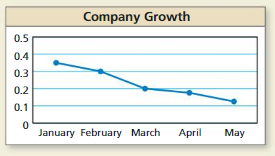
Question 28.
HOW DO YOU SEE Information technology?
The managing director of a company sees the graph shown and concludes that the company is experiencing a decline. What is missing from the graph? Explain why the manager may exist mistaken.
Answer:
Question 29.
REASONING
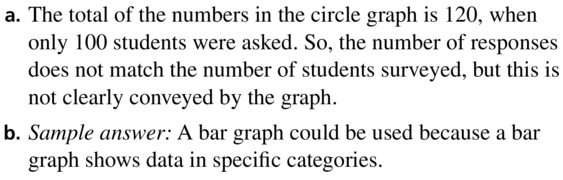
A survey asked 100 students most the sports they play. The results are shown in the circle graph.
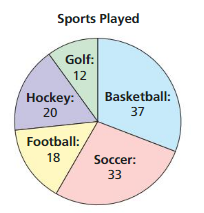
a. Explain why the graph is misleading.
b. What blazon of data display would be more advisable for the data? Explain.
Respond:
Question 30.
THOUGHT PROVOKING
Employ a spreadsheet program to create a type of data display that is not used in this section.
Answer:
Question 31.
REASONING
What type of data display shows the manner of a information prepare?
Answer:

Maintaining Mathematical Proficiency
Determine whether the relation is a role. Explain.(Section 3.1)
Question 32.
(-5, -i), (-6, 0), (-5, one), (-ii, ii), (3 , iii)
Answer:
Question 33.
(0, 1), (4, 0), (8, i), (12, two), (16, three)
Answer:

Data Analysis and Displays Performance Job: College Students Written report Time
11.4–11.v What Did You Learn?
Core Vocabulary

Core Concepts
Mathematical Practices
Question 1.
Consider the data given in the ii-way table for Exercises 5–8 on page 614. Your sophomore friend responded to the survey. Is your friend more likely to have responded "yes" or "no" to buying a tiffin? Explicate.
Reply:
Question ii.
Use your answer to Practise 28 on page 622 to explain why information technology is of import for a company manager to encounter accurate graphs.
Answer:
Information Analysis and Displays Chapter Review
xi.1 Measures of Center and Variation (pp. 585–592)
Question 1.
Use the data in the instance above. You run 4.0 miles on Twenty-four hour period 11. How does this boosted value affect the hateful, median, and mode? Explicate.
Answer:
Question 2.
Apply the information in the instance above. You run 10.0 miles on Twenty-four hours xi. How does this boosted value affect the hateful, median, and mode? Explain.
Answer:
Find the mean, median, and mode of the information.
Question 3.
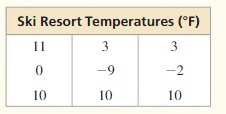
Reply:
Question four.
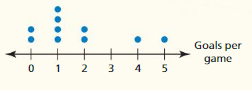
Answer:
Notice the range and standard deviation of each data set up. Then compare your results.
Question 5.
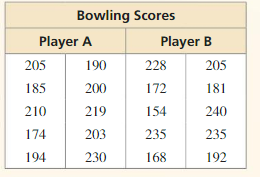
Answer:
Question 6.
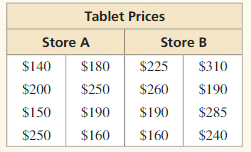
Answer:
Find the values of the measures shown after the given transformation.
Hateful: 109 Median: 104 Style: 96 Range: 45 Standard divergence: 3.6
Question 7.
Each value in the data set increases past 25.
Answer:
Question eight.
Each value in the data prepare is multiplied by 0.vi
Answer:
11.ii Box-and-Whisker Plots (pp. 593–598)
Brand a box-and-whisker plot that represents the data. Place the shape of the distribution.
Question 9.
Ages of volunteers at a hospital:
14, 17, 20, 16, 17, fourteen, 21, eighteen, 22
Answer:
Question 10.
Masses (in kilograms) of lions:
120, 230, 180, 210, 200, 200, 230, 160
Respond:
11.three Shapes of Distributions (pp. 599–606)
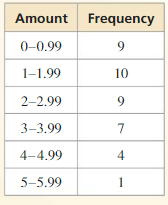
Question eleven.
The frequency table shows the amounts (in dollars) of money the students in a course have in their pockets.
a. Display the data in a histogram. Draw the shape of the distribution.
b. Which measures of heart and variation all-time represent the information?
c. Compare this distribution with the distribution shown in a higher place using their shapes and advisable measures of center and variation.
Reply:
eleven.four Two-Way Tables (pp. 609–616)
Question 12.
The ii-way table shows the results of a survey that asked shoppers at a mall about whether they similar the new nutrient court.
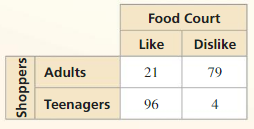
a. Brand a ii-manner table that shows the joint and marginal relative frequencies.
b. Make a two-way tabular array that shows the conditional relative frequencies based on the cavalcade totals.
Answer:
eleven.5 Choosing a Data Brandish (pp. 617–622)
Question 13.
Analyze the information in the table at the correct and and so create a display that all-time represents the information. Explain your reasoning.
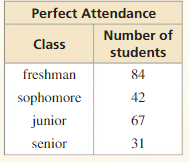
Answer:
Tell whether the data are qualitative or quantitative. Explicate.
Question 14.
heights of the members of a basketball game team
Answer:
Question 15.
course level of students in an uncomplicated school
Respond:
Data Analysis and Displays Affiliate Test
Draw the shape of the data distribution. Then determine which measures of center and variation best represent the data.
Question 1.
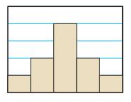
Answer:
Question 2.
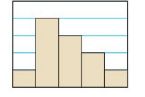
Answer:
Question 3.
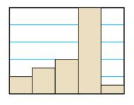
Answer:
Determine whether each statement is always, sometimes, or never true. Explain your reasoning.
a. The sum of the marginal relative frequencies in the "full" row and the "full" column of a two-style table should each exist equal to i.
b. In a box-and-whisker plot, the length of the box to the left of the median and the length of the box to the right of the median are equal.
c. Qualitative data are numerical.
Answer:
Question five.
Detect the hateful, median, mode, range, and standard divergence of the prices.
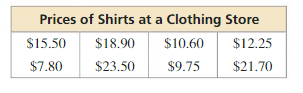
Answer:
Question vi.
Repeat Exercise 5 when all the shirts in the clothing shop are 20% off.
Answer:
Question 7.
Which information display all-time represents the data, a histogram or a stalk-and-foliage plot? Explain.
15, 21, 18, 10, 12, xi, 17, 18, sixteen, 12, twenty, 12, 17, 16
Answer:
Question 8.
The tables show the battery lives (in hours) of two brands of laptops.
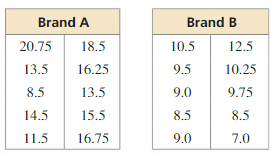
a. Make a double box-and-whisker plot that represents the data.
b. Identify the shape of each distribution.
c. Which brand'south battery lives are more spread out? Explain.
d. Compare the distributions using their shapes and appropriate measures of middle and variation.
Answer:
Question ix.
The table shows the results of a survey that asked students their preferred method of exercise. Clarify the data and so create a display that best represents the data. Explain your reasoning.
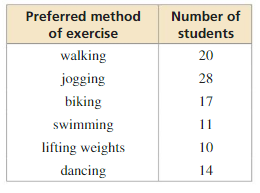
Reply:
Question 10.
You deport a survey that asks 271 students in your class whether they are attention the class field trip. Ane hundred twenty-one males respond 92 of which are attending the field trip. Xxx-i females are not attending the field trip.
a. Organize the results in a two-way table. Observe and interpret the marginal frequencies.
b. What percent of females are attention the class field trip?
Reply:
Data Analysis and Displays Cumulative Assessment
Question 1.
Yous inquire all the students in your grade whether they have a cell phone. The results are shown in the two-way table. Your friend claims that a greater per centum of males in your grade accept cell phones than females. Practise yous back up your friend'due south claim? Justify your answer.
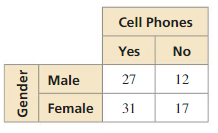
Answer:
Question ii.
Use the graphs of the functions to answer each question.
a. Are at that place any values of x greater than 0 where f (x) > h(x)? Explicate.
b. Are at that place any values of 10 greater than 1 where g(x) > f(10)? Explicate.
c. Are there any values of x greater than 0 where chiliad(x) > h(ten)? Explain.
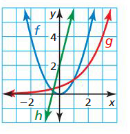
Reply:
Question 3.
Allocate the shape of each distribution as symmetric, skewed left, or skewed right.
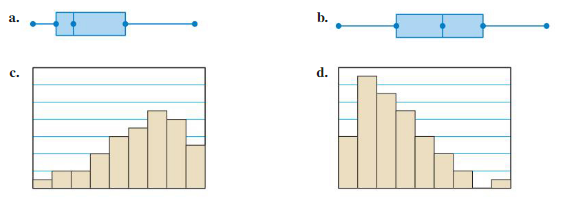
Answer:
Question 4.
Complete the equation so that the solutions of the system of equations are (-2, iv) and (one, -5).
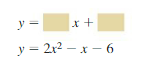
Answer:
Question five.
Pair each role with its changed.
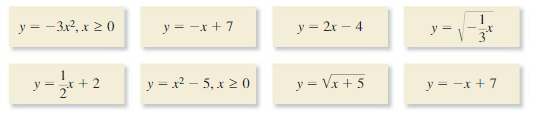
Answer:
Question 6.
The box-and-whisker plot represents the lengths (in minutes) of project presentations at a science fair. Find the interquartile range of the information. What does this represent in the context of the situation?

A. 7; The middle half of the presentation lengths vary by no more 7 minutes.
B. 3; The presentation lengths vary by no more than 3 minutes.
C. 3; The centre half of the presentation lengths vary by no more than 3 minutes.
D. 7; The presentation lengths vary by no more than 7 minutes.
Answer:
Question 7.
Scores in a video game can exist betwixt 0 and 100. Use the data set shown to fill in a value for x so that each statement is truthful.
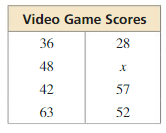
a. When x = ____, the mean of the scores is 45.v.
b. When x = ____, the median of the scores is 47.
c. When x = ____, the manner of the scores is 63.
d. When x = ____, the range of the scores is 71.
Answer:
Question 8.
Select all the numbers that are in the range of the office shown.
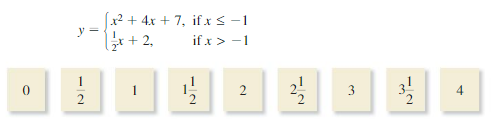
Answer:
Question 9.
A traveler walks and takes a shuttle bus to get to a concluding of an airport. The function y = D(x) represents the traveler'southward distance (in feet) later 10 minutes.
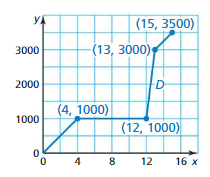
a. Estimate and interpret D(2).
b. Use the graph to detect the solution of the equation D(x) = 3500. Explain the meaning of the solution.
c. How long does the traveler wait for the shuttle coach?
d. How far does the traveler ride on the shuttle passenger vehicle?
east. What is the total distance that the traveler walks before and later riding the shuttle autobus?
Answer:
Source: https://bigideasmathanswer.com/big-ideas-math-algebra-1-answers-chapter-11/
0 Response to "Big Ideas Algebra 1 Tests and Chapter Review"
Post a Comment